

Understanding Why You Need Coolant for Surface Grinding
Surface grinding might look straightforward, but the process generates tremendous friction and heat where the wheel meets the workpiece. In just seconds, temperatures at the grinding interface can exceed 1,000°C. Without proper coolant, that heat transfers into both the part and the wheel, leading to burns, warping, microcracks, and even bond breakdown.
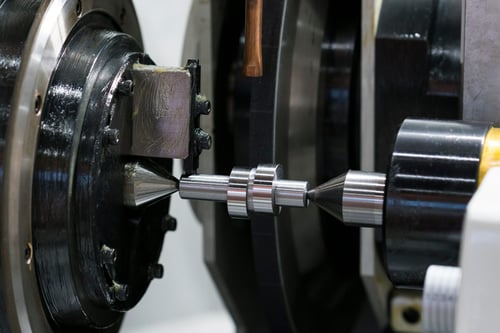
Coolant in surface grinding serves four key functions: heat control, friction reduction, chip removal, and part quality improvement. By maintaining temperature stability and flushing away swarf, coolant helps operators achieve consistent finishes and extend wheel life — especially when working with hard materials or tight tolerances.
What Does Coolant Do for Grinding Operations?
Heat Control and Grinding Performance
Grinding is fundamentally a high-energy cutting process. Each abrasive grain acts like a tiny cutting tool, shearing material and creating friction. Coolant acts as both a lubricant and a heat sink, absorbing and carrying away heat before it damages the part or softens the wheel bond.
Proper coolant flow prevents grinding burn, helps preserve metallurgical integrity, and allows for more aggressive feed rates without sacrificing tolerance or finish. The result: higher material removal efficiency and lower rework rates.
Surface Quality and Wheel Life
Surface finish depends heavily on temperature and lubrication. Excess heat or wheel glazing can dull the abrasive surface, producing chatter or streaks on the workpiece. The right coolant maintains a clean, cool grinding zone — reducing friction, keeping grains sharp, and extending wheel life.
Coolant also reduces loading, which is critical for maintaining part geometry over long production runs.
Chip Removal and Grinding Efficiency
Each pass of the wheel generates thousands of chips. If these chips remain in the grinding zone, they clog the wheel face and cause poor cutting performance. Coolant’s flushing action clears debris, exposes new sharp cutting edges, and keeps the wheel “open.” This not only enhances grinding efficiency but also minimizes dressing frequency.
How Coolant Impacts Different Grinding Applications
Surface, Centerless, and Double Disk Grinding
In these continuous-contact operations, the grinding interface stays engaged for long periods — meaning heat builds rapidly. Coolant ensures thermal stability, minimizes dimensional drift, and reduces downtime from wheel loading. Centerless and double-disk grinding, in particular, benefit from high-volume coolant delivery to flush both grinding zones effectively.
Hardface, HVOF, and PCD/PCBN Work
Grinding hard coatings like tungsten carbide, Stellite, or HVOF-applied layers generates extreme friction and localized temperatures. The same is true when machining PCD and PCBN tooling materials. Without coolant, wheel loading, micro-chipping, or even delamination can occur.
In these cases, coolant isn’t optional — it’s essential to protect both the coating and the superabrasive wheel. A properly balanced, clean coolant maintains edge integrity and ensures repeatable, high-quality finishes.
When Dry Grinding Still Works (Wood, Ceramics, and Non-Ferrous Materials)
There are a few applications where dry grinding remains viable — typically where the contact area is small and the material doesn’t react adversely to heat. Examples include woodworking, ceramics, graphite, and certain non-ferrous materials like aluminum or brass.
However, even in these cases, coolant improves consistency, surface finish, and tool life. “Dry” may be acceptable, but “wet” is almost always better for precision work.
Choosing the Right Coolant for Diamond and CBN Grinding Wheels
Diamond and CBN wheels behave differently under heat, so coolant selection matters.
- Diamond wheels are ideal for non-ferrous materials, carbides, and ceramics but can react with iron at elevated temperatures. Effective cooling prevents graphitization and preserves diamond life.
- CBN wheels excel on hardened steels and nickel- or cobalt-based superalloys because CBN remains stable at higher temperatures. Still, maintaining coolant flow protects the bond and improves cutting consistency.
When selecting a coolant:
- Match chemistry (synthetic, semi-synthetic, or oil-based) to the grinding material.
- Ensure proper pH balance and rust inhibition to protect machine components.
- Use adequate flow and filtration to prevent foam and particle buildup.
- Verify compatibility with both resin and metal bonds for maximum wheel longevity.
Improving Grinding Performance with Eagle’s GrindClean Coolant
Eagle’s GrindClean Coolant line was developed specifically for superabrasive applications — including diamond and CBN grinding wheels used in surface, centerless, and hardface operations. GrindClean Coolant offers:
- Exceptional cooling and lubricity to prevent burn and extend wheel life.
- Non-foaming, rust-inhibiting chemistry compatible with a wide range of materials.
- Clean-running formulation that minimizes residue and maximizes filtration efficiency.
By combining the right coolant with a properly engineered wheel, you’ll achieve superior surface finishes, tighter tolerances, and longer intervals between dressing and wheel replacement.
Learn more about Eagle’s GrindClean Coolant or contact our team to optimize your grinding setup and keep your operation running cooler, cleaner, and more efficiently.