

Grinding glass and technical ceramics presents a very different challenge in glass processing than grinding metals does.. Materials such as optical glass, quartz, fused silica, alumina, zirconia, and other advanced ceramics can be extremely hard while also being brittle and susceptible to chipping, cracking, and subsurface damage.
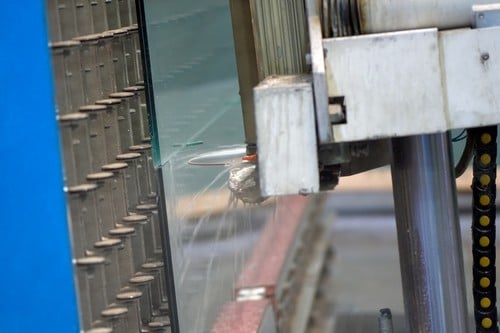
For manufacturers in the glass industry, that means grinding wheel selection affects much more than material removal rate. The wrong wheel specification can produce unacceptable edge quality, introduce microscopic damage below the surface, increase scrap, and require additional finishing operations.
A diamond grinding wheel for glass and ceramics is the primary superabrasive for these applications because of its extreme hardness and ability to efficiently grind hard, brittle, non-ferrous materials. But simply specifying a diamond wheel isn't enough. Bond type, grit size, concentration, wheel geometry, machine parameters, coolant delivery, and the material being ground all influence the final result.
Here are five important types of diamond wheels for glass and ceramic applications and how manufacturers can determine which wheel is best suited to their process.
Why Glass and Ceramic Grinding Demands a Different Approach
That difference starts with how these materials physically respond to a grinding wheel in the first place.
The Brittle Nature of Glass and Technical Ceramics
Glass and technical ceramics don't deform during grinding the way many metals do. Instead, material removal can involve brittle fracture as well as more controlled material-removal mechanisms. If grinding forces become excessive, cracks can propagate from the grinding zone and create edge chips or damage beneath the finished surface.
That makes controlling the grinding process especially important.
Research into grinding silicon nitride ceramic balls illustrates how significantly the grinding method can affect results. In the reported research, bonded abrasive grinding achieved a material removal rate approximately 20 times greater than free-abrasive grinding while also producing less subsurface damage and better overall surface quality.
The research concerns silicon nitride ceramic balls rather than every type of glass or technical ceramic, so the 20-times result shouldn't be interpreted as a universal performance improvement for all ceramic applications. It does, however, demonstrate an important principle: how the diamond abrasive is applied and controlled can influence both productivity and surface integrity.
For glass and ceramic manufacturers, the objective isn't simply to remove material quickly. It's to remove it predictably while controlling fracture and preserving the integrity of the finished component.
Precision, Edge Quality, and Subsurface Damage Control
Visible chipping is only one potential problem when grinding brittle materials. Damage can also extend beneath the finished surface.
Subsurface cracks may reduce component strength or create problems during subsequent manufacturing operations. This becomes particularly important in precision glass, optical components, semiconductor-related ceramics, and engineered ceramic components where surface integrity is critical.
Successful grinding therefore requires balancing several factors:
- Material removal rate
- Edge quality
- Surface finish
- Subsurface damage
- Wheel wear
- Grinding forces
- Heat generation
- Production cycle time
The best diamond wheel is the one that achieves the required geometry and surface quality at an acceptable production rate without introducing unacceptable damage.
1. Metal Bond Diamond Wheels
For applications where wheel life and dimensional stability matter most, metal bond is often the starting point.
Built for Demanding Grinding of Glass and Technical Ceramics
Metal bond diamond wheels are known for strong diamond retention, wear resistance, and excellent form holding. These characteristics can make them well suited for demanding glass and ceramic applications where wheel life and dimensional stability are priorities.
Metal bond wheels may be used to grind materials including:
- Glass
- Quartz
- Fused silica
- Alumina
- Zirconia
- Other advanced ceramics
Because the bond retains the diamond particles strongly, these wheels can provide a durable, long service life and maintain their geometry during demanding grinding operations.
However, greater bond strength isn't automatically better. A wheel must expose fresh, sharp diamond edges at an appropriate rate to continue cutting efficiently. A wheel that is too hard for the application can increase grinding forces or require a different dressing strategy.
The correct bond specification therefore depends on the material, machine, stock removal requirements, and desired finish.
Best Suited for Stock Removal, Edging, and Beveling Operations
Metal bond diamond wheels can be effective for stock removal and certain glass edging and beveling applications where durability and form retention are important.
For example, an edging operation may require the wheel to remove enough material to establish the required geometry while maintaining consistent dimensions across a high-volume production run.
The wheel specification still needs to account for edge quality. Excessive grinding forces can increase chipping, while an overly fine or poorly matched wheel may reduce productivity.
Rather than selecting metal bond solely for its durability, manufacturers should balance stock removal, edge quality, wheel life, and dressing requirements.
2. Resin Bond Diamond Wheels
When surface finish takes priority over maximum wheel life, resin bond wheels become the better fit.
Delivering a Fine Surface Finish
Resin bond diamond wheels generally provide a more free-cutting grinding action than harder bond systems and can be engineered for applications where surface finish and reduced grinding forces are priorities.
This makes resin bond an important option for precision glass and ceramic grinding.
Depending on the wheel specification and material, resin bond diamond wheels can help:
- Reduce grinding forces
- Improve surface finish
- Minimize edge chipping
- Produce controlled material removal
- Prepare surfaces for subsequent finishing or polishing
Grit size plays an important role. Coarser diamond generally increases material removal but produces a rougher finish, while finer diamond can improve surface quality at the expense of removal rate.
Where Resin Bond Wheels Fit in the Glass Polishing Process
It is important to distinguish fine grinding from true polishing.
A fine-grit resin bond diamond wheel can produce a very smooth surface and substantially reduce the amount of damage left by earlier grinding stages. However, applications requiring an optical or highly polished finish may still require subsequent polishing processes.
Resin bond wheels are therefore often best considered part of a staged finishing process rather than assuming the grinding wheel alone produces the final polished surface.
A typical process may progress from more aggressive stock removal to progressively finer grinding before the component reaches its required final finish.
3. Diamond Cup Wheels
Beyond bond type, wheel geometry itself plays a major role in how the diamond contacts the workpiece.
Shaping and Seaming Glass Edges With Precision
Unlike metal and resin bonds, the cup wheel describes wheel geometry rather than bond type. A diamond cup wheel can be manufactured with different bond systems and diamond specifications depending on the application.
Cup wheels provide a broad grinding face and can be useful for glass and ceramic operations requiring controlled surface or edge grinding.
Depending on the machine and wheel design, they can be used for:
- Edge grinding
- Seaming
- Surface grinding
- Shaping
- Material removal on flat surfaces
The wheel's geometry provides stability and allows manufacturers to control how the diamond contacts the workpiece.
Balancing Cutting Speed With Edge Quality
Increasing stock removal doesn't automatically improve the grinding process.
Aggressive grinding can increase edge chipping and subsurface damage, particularly when processing brittle materials. On the other hand, an excessively fine wheel or overly conservative grinding parameters can unnecessarily increase cycle time.
The correct diamond cup wheel specification balances:
Removal rate + edge quality + wheel life + surface finish
That balance depends on diamond grit size, concentration, bond formulation, wheel speed, feed rate, depth of cut, coolant delivery, and workpiece material.
4. Diamond Profile Wheels
Some applications call for more than a flat ground surface, which is where profile wheels come in.
Creating Radius, Bullnose, and Custom Edge Profiles
Profile wheels are engineered to generate a specific geometry in the workpiece rather than simply producing a flat ground surface.
For glass manufacturing, diamond profile wheels can be used to produce shapes such as:
- Radiused edges
- Bullnose profiles
- Decorative contours
- Custom edge geometries
Because the wheel's profile is transferred to the workpiece, form accuracy and wheel wear become especially important.
As the wheel changes shape through use, the resulting glass profile can also change. A properly engineered profile wheel must therefore balance cutting action with sufficient form retention to maintain the required geometry throughout production.
Matching Profile Geometry to Architectural and Decorative Glass
Architectural and decorative glass applications often require more than simply removing sharp edges.
Edge geometry can affect appearance, fit, handling characteristics, and the way light interacts with the finished glass. Profile selection should therefore begin with the required finished geometry and work backward to the appropriate wheel design.
Wheel diameter, profile dimensions, diamond grit, bond, machine parameters, and production volume should all be considered when designing the wheel.
For custom applications, the profile itself may need to be engineered around the customer's drawing or finished-part requirements.
5. Pencil Edge Wheels
One of the most common profile applications is producing a smooth, rounded edge rather than a beveled one.
Achieving a Smooth, Rounded Edge on Glass
Pencil edge wheels are shaped to produce a rounded profile along the edge of a piece of glass. Rather than creating the flat angled surface associated with glass beveling, a pencil edge produces a smooth curved edge.
This geometry is widely used when manufacturers want to remove sharp corners while creating a clean, finished appearance.
Pencil edging is one of several glass edge treatments, and understanding the differences can help determine which wheel geometry is appropriate for a specific glass application. To see how pencil edge grinding compares to other glass edge styles, including beveling, seaming, and flat-edge processing, review our guide to common glass grinding techniques.
As with other profile operations, the wheel must maintain its geometry throughout production. Changes in wheel form can directly affect the radius and consistency of the finished glass edge.
Common Applications in Glass Manufacturing
Pencil edges can be used in a variety of finished glass products where a smooth, rounded edge is desirable.
Depending on the product and glass type, applications may include:
- Furniture glass
- Shelving
- Tabletops
- Mirrors
- Decorative glass
- Architectural glass components
The correct wheel specification depends on glass thickness, desired radius, production speed, edge-quality requirements, and machine configuration.
Matching the Right Wheel to Your Glass or Ceramic Application
With all five wheel types in mind, the real work is matching that knowledge to your specific material and job.
Why Material, Grit, and Bond Selection Depend on the Job
One of the most common mistakes in glass and ceramic grinding is assuming that a wheel that performs well on one brittle material will automatically perform well on another.
“Ceramic” describes an enormous range of engineered materials.
Alumina, zirconia, silicon nitride, quartz, fused silica, and optical glass can respond differently to grinding. Material hardness is important, but it is only one variable.
A wheel specification should consider:
- Exact workpiece material
- Material properties
- Amount of stock to remove
- Required edge geometry
- Desired surface finish
- Acceptable chipping level
- Subsurface damage requirements
- Machine type
- Wheel speed
- Feed rate
- Coolant type and delivery
- Production volume
Selecting the Right Diamond Grit
Diamond grit size has a direct influence on the balance between material removal and surface quality.
In general:
- Coarser diamond provides more aggressive material removal but can increase surface roughness and the potential for chipping or subsurface damage.
- Finer diamond generally improves surface finish and can reduce damage, but may remove material more slowly.
There is no universal “best grit” for a ceramic application. The optimum specification depends on the material, operation, finish requirement, and machine.
Many manufacturing processes therefore use multiple grinding stages, beginning with a wheel designed for efficient stock removal and progressing to finer wheels as the required surface finish becomes more demanding.
Working With an Application Engineer for a Custom Solution
Glass and ceramic grinding applications frequently benefit from custom wheel engineering because small changes in wheel specification can produce significant changes in performance.
An application engineer may evaluate:
- Diamond grit size
- Diamond concentration
- Bond formulation
- Wheel geometry
- Wheel dimensions
- Operating speed
- Material removal requirements
- Surface-finish targets
- Current wheel performance
The objective isn't simply to make the hardest or longest-lasting wheel possible. It is to engineer a wheel that produces the required part quality efficiently and consistently.
A wheel with extremely long life isn't necessarily the most economical solution if it increases grinding forces, creates more chipping, or slows production.
Talk to Eagle Superabrasives About the Right Wheel for Your Glass or Ceramic Application
Glass and ceramic grinding requires careful control of abrasive, bond, wheel geometry, and grinding parameters. A diamond wheel that performs exceptionally well on one material or operation may produce completely different results when applied to another.
Eagle Superabrasives develops custom diamond grinding wheels around the specific application rather than relying on a one-size-fits-all specification.
Whether you're grinding glass, quartz, fused silica, alumina, zirconia, or another advanced ceramic, our application specialists can evaluate your material, machine, geometry, surface-finish requirements, and production goals to develop a wheel specification suited to the process.
If you're experiencing excessive edge chipping, poor surface finish, short wheel life, excessive dressing, or inconsistent part quality, the grinding wheel specification may be part of the problem.
Talk with an Eagle Superabrasives application specialist about engineering the right diamond wheel for your glass or ceramic grinding process.