

In the world of high-precision grinding, few things impact your bottom line more than how you manage your synthetic coolant. From aerospace to medical component manufacturing, operations managers and process engineers often focus on wheel grit, bond types, or machine specs — but overlook the performance-critical role of their metalworking fluid.
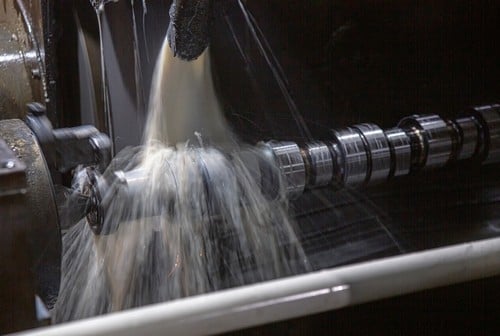
Poor coolant system performance can lead to wheel loading, thermal damage, machine damage, and premature wheel wear. This guide explains how to avoid those costly mistakes and maximize coolant effectiveness — especially when using advanced superabrasives like diamond and CBN wheels.
The Critical Role of Coolant in High-End Grinding
Maximizing Cutting Efficiency with Custom Diamond and CBN Wheels
In high-precision grinding, the effectiveness of your cutting action depends not just on the wheel itself, but on how well your CNC coolant controls heat buildup, flushes swarf from the contact zone, and maintains stable grinding conditions. A well-formulated, properly maintained synthetic coolant is essential for:
- Clearing swarf from the cutting interface to maintain wheel sharpness
- Reducing friction between abrasive grains and the workpiece
- Dissipating heat to preserve cutting speed and dimensional accuracy
- Maintaining a consistent chip load across the wheel face
When coolant becomes contaminated or its concentration drifts outside the recommended range, it can no longer control heat or flush swarf effectively — leading to reduced cutting efficiency and inconsistent surface finishes. — all of which compromise part quality and productivity.
To achieve optimal performance from your diamond or CBN wheels, your coolant must work in sync with the wheel to maintain aggressive, stable cutting throughout the cycle.
Beyond Basic Metalworking Fluid: Engineering for Superabrasives
Standard metalworking fluids aren’t designed for the rigors of superabrasive grinding. You need synthetic formulations that:
- Resist thermal breakdown at higher temperatures
- Maintain stable emulsions under pressure
- Offer fine filtration support for micron-level cleanliness
- Prevent cobalt leaching when grinding tungsten carbide
For high-end grinding, synthetic coolants aren’t optional — they’re essential.
How Specialized Lubricant Properties Reduce Heat and Friction
The right synthetic coolant includes additives that:
- Minimize friction between abrasive and workpiece
- Create a heat barrier to protect the tool edge
- Improve surface finish through reduced mechanical and thermal stress
Fewer dressings, better finishes, and longer wheel life — that’s the coolant difference.
Choosing the Right Metalworking Fluid for Your CNC Machine
Synthetic Coolant vs. Semi-Synthetic: Which Offers Better Performance?
- Synthetic coolants (100% chemical-based):
- Longer service life
- Superior heat resistance
- Ideal for carbide and hard metals
- Semi-synthetics (oil + water-based):
- Better lubricity in lower-speed applications
- Require more frequent maintenance
For grinding operations using diamond or CBN wheels, fully synthetic coolants offer a clear advantage in tool protection and finish quality.
Why the Type of Coolant Matters for Carbide and Aerospace Alloys
Aerospace alloys, cobalt-based materials, and carbides demand:
- Stable pH levels
- High thermal control
- Compatibility with filtration and coolant delivery systems
- Non-reactive chemistry to prevent corrosion or cobalt leaching
The wrong metalworking fluid can cause thermal cracking, part contamination, and poor dimensional accuracy.
Preventing Tool Wear and Cobalt Leaching with Proper Coolant
Grinding tungsten carbide without the right coolant risks cobalt leaching, which causes:
- Surface integrity loss
- Toxic exposure risks for operators
- Premature failure of the part in service
Specialized synthetic coolants prevent this chemical breakdown — and keep both your tools and people safe.
Water-Soluble vs. Straight Oil: Matching the Fluid to the Machining Operation
- Water-soluble coolants: Better cooling, easier cleanup, lower cost
- Straight oils: Better lubricity, better finish but higher misting, fire risk, and cleanup needs
Most high-speed CNC grinding benefits from oil based coolants — as long as they’re cooled, filtered and maintained properly.
Advanced Lubrication and Friction Reduction in Grinding
How Extreme Pressure Additives Protect the Cutting Edge
Coolants engineered with EP (Extreme Pressure) additives:
- Form a protective layer at high temperatures
- Reduce wheel dulling and material adhesion
- Minimize micro-cracking at the contact zone
This is critical for superabrasives grinding hard or exotic alloys.
Reducing Friction Between the Cutting Tool and the Workpiece
Proper coolant lubrication reduces:
- Energy consumption
- Heat generation
- Load on the spindle and feed system
Less friction = better finish and longer cutting tool and wheel life.
Role of Cooling and Lubrication in High-Speed Machining
In high-speed CNC applications, thermal control is everything. Coolants:
- Prevent thermal deformation of the part
- Maintain tight tolerances
- Reduce dressing frequency
Your coolant must match the speed and intensity of your grinding application.
Maintaining Optimal Coolant Systems for Cutting Performance
Using a Refractometer to Ensure the Correct Coolant Concentration
Coolant must stay within the manufacturer’s recommended Brix range. Use a refractometer to:
- Monitor coolant strength
- Prevent overdilution or concentration
- Extend coolant life
Concentration affects every aspect of cooling, lubrication, and chemical stability.
The Science of High-Speed Filtration and Fine Management
Grinding generates microscopic particles that degrade coolant fast. To combat this:
- Filter coolant to 5 microns or less
- Use bag filters, magnetic separators, or centrifuges
- Eliminate recirculation of fines that cause tool wear and part scratching
Effective filtration is the foundation of long coolant and wheel life.
Managing Additive Levels to Prevent Sump Sink and Bacteria
Additives settle out over time — a process called sump sink. Avoid it by:
- Regular agitation
- Scheduled testing for biocide, corrosion inhibitors, and emulsifiers
- Replenishing based on chemical analysis, not just smell or color
Bacteria love neglected coolant. Maintain your chemistry — not just your clarity.
Proper Machine Cleaning and Debris Removal from the Cutting Area
Coolant effectiveness also depends on clean delivery:
- Clear swarf from nozzles and lines
- Remove sludge and sludge traps
- Clean sumps regularly to eliminate bacterial hotspots
Clean machines support clean coolant.
Best CNC Coolant Practices for Operational Efficiency
How Proper Coolant Use Minimizes Machine Downtime
Coolant-related failures cost more than you think. Proactive coolant management:
- Prevents pump failures
- Reduces unscheduled downtime
- Avoids unplanned tool replacements
- Increases consistency across shifts
A few minutes of testing per week can save thousands in unexpected repairs.
Achieving a Superior Surface Finish through Clean Coolant
A clean synthetic coolant:
- Prevents wheel loading and glazing
- Improves surface finish
- Reduces thermal distortion
- Ensures accuracy in high-tolerance parts
Especially critical in medical, aerospace, and tool grinding.
Temperature Control and Corrosion Protection for Machined Parts
Coolant isn’t just about lubrication — it’s about thermal stability. Look for:
- Minimal temperature drift during long cycles
- Corrosion protection on machine internals and finished parts
- Stability under variable flow conditions and loads
Synthetic coolants maintain better control over temperature and corrosion compared to conventional fluids.
The Long-Term ROI of Investing in High-Quality Synthetic Coolants
If you’re wondering whether upgrading your coolant is worth it, consider this:
The costs related to cutting fluid account for approximately 17% of the cost of the finished workpiece, while the tool itself accounts for only 4%.
— PMC Journal
That means you’re likely spending more on coolant than on your wheels — without even realizing it.
Investing in premium coolant, testing tools, and proper maintenance can:
- Extend wheel life by up to 50%
- Improve part consistency
- Reduce rework and scrap
- Lower total cost per finished part
The ROI is real — and measurable.
Experience the Eagle Advantage: Custom Grinding Solutions and Premium Coolants
At Eagle Superabrasives, we don’t just manufacture top-tier diamond and CBN wheels. We help you optimize your entire grinding system — including:
- Recommendations for synthetic coolant based on application
- Troubleshooting coolant-related finish and wear issues
- Guidance on coolant testing, filtration, and sump maintenance
- Helping you align fluid strategy with your abrasive technology
If your coolant isn’t matching the performance of your machine or wheel, we’ll help you close the gap.
Conclusion
In high-precision CNC grinding, your synthetic coolant is every bit as important as your wheel, machine, or setup. When managed correctly, it boosts productivity, extends tool life, and helps you achieve the accuracy modern manufacturing demands.
Don’t let overlooked fluids hold you back. Let Eagle Superabrasives help you unlock the full potential of your wheels — and your entire grinding process.