

Carbon fiber reinforced polymer (CFRP) combines high strength, low weight, and excellent stiffness, making it an important material in aerospace, automotive, sporting goods, energy, and other high-performance applications. Those same properties also make it difficult to find the right tools for cutting carbon fiber.
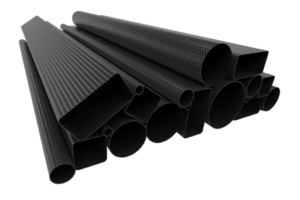
Unlike a homogeneous metal, CFRP combines extremely abrasive carbon fibers with a polymer resin matrix. The cutting tool must work through materials with very different mechanical properties while avoiding delamination, splintering, fiber pullout, and excessive heat.
Carbide tooling remains one of the common options for cutting carbon fiber, particularly in lower-volume applications. But as production volume increases, abrasive wear can quickly affect cutting-edge condition and part quality.
Diamond's exceptional abrasion resistance makes diamond tooling and wheels particularly valuable for repeated cutting and grinding of carbon fiber composites. The correct diamond wheel specification can help manufacturers maintain cleaner cuts, control tool wear, and achieve more consistent results across production runs.
Why Carbon Fiber Is So Difficult on Cutting Tools
The difficulty starts with what CFRP actually is at the material level.
The Abrasive Nature of Carbon Fiber and Resin Composites
CFRP isn't a single material.
It consists of carbon fibers held within a polymer matrix, commonly an epoxy or another thermoset or thermoplastic resin. The fibers provide much of the composite's strength and stiffness, while the matrix supports and transfers loads between them.
During machining, the cutting edge repeatedly encounters hard, abrasive fibers at different orientations while simultaneously cutting the softer resin matrix.
That combination creates demanding and sometimes highly variable cutting conditions.
Research into CFRP machining consistently identifies abrasive tool wear, material anisotropy, cutting-force fluctuations, delamination, and thermal damage among the major challenges of machining these composites.
Why Standard Blades and Bits Wear Out Quickly
Carbide is significantly harder and more wear-resistant than conventional high-speed steel, making it one of the most common tools to cut carbon fiber composites.
But CFRP is particularly abrasive.
As a carbide cutting edge wears, its geometry changes. Instead of severing fibers cleanly, the worn edge can increasingly push, bend, or tear them.
That can lead to:
- Frayed edges
- Fiber pullout
- Delamination
- Increased cutting forces
- Poor dimensional accuracy
- Higher cutting temperatures
The issue is therefore not simply how long a tool survives before catastrophic failure.
It's how long that tool maintains an edge capable of producing an acceptable part.
Diamond Versus Carbide for Cutting Carbon Fiber
Given how quickly CFRP wears a cutting edge, the choice of abrasive becomes a production-volume decision.
Where Carbide Tooling Falls Short at Production Volume
Carbide can be an economical solution when cutting relatively small quantities of CFRP or where finish requirements are less demanding.
The economics change as production increases.
If abrasive wear causes the cutting edge to deteriorate quickly, manufacturers may need more frequent tool changes. Each change introduces tooling cost, machine downtime, setup time, and the possibility of variation as one tool reaches the end of its useful life and another begins cutting.
Tool wear can therefore become a production problem before the tool physically fails.
Why Diamond Holds a Cutting Edge Longer
Diamond is the hardest commonly used abrasive and offers exceptional resistance to abrasive wear.
That characteristic makes it particularly well suited to carbon fiber and other highly abrasive nonferrous composite materials.
The advantage isn't simply longer wheel life.
Maintaining effective diamond cutting points can help keep cutting forces more stable throughout the production run. More consistent cutting action supports better dimensional control and reduces the tendency to tear or push fibers rather than cut them.
This is why the value of diamond becomes increasingly apparent as production volume and part-quality requirements increase.
Delamination, Splintering, and Fiber Pullout
Tool wear isn't the only risk; how the wheel interacts with the laminate itself can also compromise the part.
What Causes Delamination When Cutting Composite Sheets
Delamination occurs when layers within a laminated composite separate.
Cutting forces can push or lift individual plies rather than cleanly severing them, particularly when the cutting edge becomes dull, feed is too aggressive, the workpiece isn't adequately supported, or tool geometry is poorly matched to the laminate.
Fiber orientation makes the problem more complex.
A tool may cut cleanly when approaching fibers at one angle and produce significantly different forces when encountering fibers oriented differently.
Splintering and fiber pullout are related problems. Instead of being cut at the intended edge, fibers can fracture unevenly, pull away from the matrix, or remain protruding from the finished surface.
How Diamond Abrasive Action Reduces Fiber Damage
A properly specified diamond abrasive wheel creates many small cutting interactions across its working surface.
Rather than relying on a single conventional cutting edge, exposed diamond particles remove the composite through controlled abrasive action.
When grit size, bond, speed, and feed are correctly matched to the CFRP, this can help sever fibers with lower and more distributed cutting forces.
However, diamond isn't a guarantee against delamination.
An incorrect diamond specification, excessive feed, vibration, poor support, or a worn wheel can still damage the laminate.
The complete cutting process must remain stable.
Achieving Clean, Precise Cuts on Complex Shapes
For components where every fiber matters, cut quality becomes just as important as tool longevity.
Why Precise Cuts Matter for Aerospace and Structural Components
Carbon fiber components are often selected for applications where strength-to-weight ratio is critical.
Aerospace structures, UAV components, automotive parts, structural panels, and other high-performance carbon fiber parts may require holes, slots, contours, and trimmed edges after molding.
Poor cutting quality can compromise more than appearance.
Delamination or damaged fibers near an edge can reduce the integrity of the laminate and create additional finishing or inspection requirements.
The objective is therefore to achieve the required geometry while disturbing as little of the surrounding composite structure as possible.
Maintaining Accuracy Across Different Material Thicknesses
Carbon fiber thickness influences wheel selection and cutting parameters.
Thin carbon fiber sheets may be particularly sensitive to vibration and mechanical support, while thicker CFRP sections create longer contact lengths and require efficient debris removal.
A specification optimized for thin sheet may not be ideal for cutting a thick structural laminate.
Wheel thickness, diamond grit, bond type, concentration, feed, cutting depth, and machine rigidity should therefore be considered together rather than independently.
Heat, Resin Degradation, and Cutting Speed
Beyond mechanical damage, the heat generated during cutting introduces its own risk to the composite.
How Excess Heat Affects the Resin Matrix
The carbon fibers themselves can tolerate temperatures that would severely affect the polymer matrix surrounding them.
That makes heat management particularly important.
Excessive cutting temperature can soften or degrade the resin, affect the fiber-matrix interface, and contribute to poor edge quality. A dull tool makes the problem worse because more cutting energy is converted into friction.
The objective is to maintain an efficient cutting action so that the wheel removes material instead of rubbing against it.
Balancing Spindle Speed and Feed to Control Heat
There is no universal "best RPM" for cutting carbon fiber.
The correct operating conditions depend on wheel diameter, wheel construction, CFRP composition, material thickness, feed rate, depth of cut, machine rigidity, and other variables.
RPM by itself can also be misleading because changing wheel diameter changes surface speed even if spindle RPM remains identical.
For that reason, manufacturers should establish the appropriate wheel surface speed and then optimize feed around the actual application.
Too aggressive a feed can increase cutting forces and delamination. Excessive speed combined with inadequate material removal can increase rubbing and heat. Extremely conservative cutting conditions aren't necessarily ideal either if they allow unnecessary friction rather than efficient cutting.
The objective is stable cutting—not simply the highest RPM or slowest possible feed.
Choosing the Right Diamond Wheel Specification
With these challenges in mind, wheel selection comes down to matching bond and grit to the specific application.
Matching Bond Type and Grit to Carbon Fiber Thickness
Bond type determines how diamond is retained and exposed during cutting.
For many new cutoff applications, a resin-bond diamond wheel can provide a useful starting point because the bond can be engineered to maintain a relatively free-cutting action.
Diamond grit selection then helps determine the balance between cutting rate and edge quality.
Coarser diamond typically provides more aggressive cutting and greater chip clearance. Finer grit can improve edge quality but may reduce cutting efficiency if taken too far.
Material thickness matters as well. A thick CFRP section creates different contact and debris-removal conditions than a thin laminate.
Getting a new setup right often comes down to fundamentals that apply across several difficult-to-machine materials. Starting with a resin bond and dialing in your cut rate before considering changes in bond or specification can help establish a stable baseline without unnecessarily forcing the wheel.
Wheel Selection for CNC Routers and Production Equipment
The machine also determines what wheel specification can be used successfully.
A high-speed CNC router, dedicated cutoff machine, and precision grinder may require very different tooling approaches.
Before specifying the wheel, manufacturers should establish:
- Spindle speed range
- Wheel diameter
- Arbor and mounting requirements
- Machine horsepower
- Machine rigidity
- Cutting depth
- CFRP thickness
- Required edge quality
- Production volume
- Dry or wet cutting conditions
- Dust extraction capability
A diamond wheel should be engineered around those operating conditions rather than selected from material type alone.
Managing Carbon Fiber Dust in Industrial Environments
Beyond the cut itself, machining CFRP introduces a byproduct that manufacturers need to manage carefully.
Why Carbon Fiber Dust Requires Proper Extraction and Ventilation
Machining CFRP can generate very fine carbon dust.
Research on dry machining of fiber-reinforced plastics identifies two important concerns: airborne particles can present an occupational exposure issue, and carbon-fiber-containing dust can be electrically conductive.
That means dust management protects both personnel and equipment.
Allowing carbon fiber dust to accumulate inside CNC machines, around electrical components, or throughout the work area is not an acceptable production strategy.
Safety Precautions for High-Volume Cutting Operations
Industrial CFRP cutting operations should use dust-control systems appropriate for the machine, material, and production volume.
Local extraction close to the cutting zone is generally more effective than relying on general room ventilation because it captures particles closer to where they are generated.
Manufacturers should also follow applicable workplace exposure requirements and the CFRP manufacturer's safety data and machining recommendations.
The dust collection system itself needs to be suitable for the material being collected. CFRP dust should not simply be treated as ordinary machining debris without considering its fine particle size, conductivity, and the characteristics of the resin system.
Diamond Wheels and the True Cost of Cutting Carbon Fiber
All of these factors ultimately come down to what a wheel actually costs to run over time, not just to buy.
Comparing Tool Life and Replacement Frequency
Purchase price is one of the easiest tooling costs to measure—and one of the easiest to overemphasize.
A lower-cost carbide tool can appear attractive until replacement frequency is considered.
A useful cost comparison should include:
Tool cost ÷ acceptable parts produced
But an even more complete calculation considers:
Tooling + tool-change downtime + setup + rejected parts + secondary finishing + machine time.
That provides a much better picture of actual production economics.
Diamond tooling typically carries a higher initial cost than basic carbide tooling. In sufficiently abrasive or high-volume CFRP applications, longer useful cutting life and more consistent part quality can offset that premium.
Why Lower Tool Cost Doesn't Always Mean Lower Production Cost
Published tooling data provides a useful illustration of this principle.
In one documented CFRP and thermoplastics application, a hard-carbon-coated countersink produced 180% more parts than an uncoated tool before replacement. The test wasn't a direct comparison between a diamond wheel and a carbide wheel, but it demonstrates why abrasion resistance can dramatically change tooling economics in CFRP machining.
The same source notes that as fiber content and abrasiveness increase, harder tooling—including diamond-coated and PCD tooling—becomes increasingly valuable for controlling wear.
For manufacturers evaluating diamond wheels, the more useful question therefore isn't:
"Which wheel costs less?"
It is:
"Which wheel produces the lowest cost per acceptable finished part?"
A tool that costs twice as much but produces several times as many acceptable components while reducing machine interruptions may be substantially less expensive in production.
Getting the Right Diamond Wheel for Your Carbon Fiber Application
Bringing all of these variables together is where the right wheel specification starts to take shape.
Matching Wheel Specification to Your Equipment and Process
There isn't one universal diamond wheel for carbon fiber.
An effective recommendation begins with the actual application.
An application engineer will typically need to understand:
- CFRP composition
- Fiber and resin system
- Laminate thickness
- Wheel diameter and thickness
- Cut depth
- Required edge quality
- Dimensional tolerance
- Machine type
- Spindle speed range
- Feed rate
- Production volume
- Current tooling
- Current tool life
- Current problems such as delamination or fiber pullout
This information helps determine the appropriate bond, grit, diamond concentration, wheel geometry, and operating range.
Working With an Application Engineer for a Custom Solution
The best carbon fiber cutting process is usually developed by balancing competing objectives.
A more aggressive specification may increase cutting rate but affect edge quality. A finer grit may produce a cleaner edge but reduce material-removal efficiency. A harder-wearing bond may extend wheel life but change cutting behavior as the wheel wears.
The solution is to optimize the entire process rather than a single specification variable.
That is especially important in production environments where a small improvement in tool life or cycle consistency is multiplied across hundreds or thousands of components.
Let Eagle Superabrasives Engineer the Right Wheel for Your Carbon Fiber Application
Carbon fiber's strength and light weight make it an exceptional engineering material. Its abrasive fibers and layered composite structure also make it one of the more demanding materials to cut consistently.
Carbide tooling can perform effectively in many CFRP operations, particularly at lower production volumes. But as abrasive wear, tool-change frequency, edge quality, and production consistency become more important, diamond becomes increasingly attractive.
The correct diamond wheel can help manufacturers maintain cutting action longer, reduce fiber damage, control delamination, and achieve more consistent dimensions across production runs.
The key is selecting more than simply "a diamond wheel."
Bond type, diamond grit, concentration, wheel geometry, thickness, machine capability, cutting speed, feed, and dust-management strategy all need to work together.
Eagle Superabrasives works with manufacturers to engineer diamond wheel specifications around the actual CFRP material and production process, helping customers evaluate performance based not only on tool price, but on tool life, part quality, process stability, and total cost per finished component.
Dealing with fast tool wear, delamination, or inconsistent edge quality on your CFRP application? Reach out to our team to work with an application engineer on a diamond wheel built for your process.