

Glass and ceramic materials present unique challenges during cutting. Unlike metals that deform plastically or masonry products that can tolerate relatively aggressive cutting conditions, glass and advanced ceramics are hard, brittle materials that are highly susceptible to chipping, cracking, breakout, and thermal damage. Achieving clean cuts, consistent edge quality, and long blade life requires much more than simply selecting a diamond blade that fits the machine.
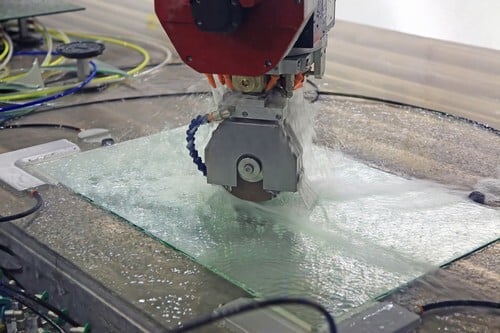
The reality is that there is no universal diamond blade for glass and ceramic cutting. The optimal blade depends on the material being cut, the desired edge quality, the machine being used, production requirements, and the overall cutting process. A blade that performs exceptionally well on porcelain tile may perform poorly on fused silica. Likewise, a blade designed for thick alumina ceramics may not produce acceptable results when cutting thin optical glass.
This guide explains how diamond blades work, how to select the right blade for different glass and ceramic materials, and how blade design, bond type, grit size, concentration, machine setup, and operating parameters influence cutting performance.
Why Glass and Ceramic Cutting Requires the Right Diamond Blade
Achieving clean, accurate cuts in glass and ceramics starts with selecting a diamond blade designed for these brittle materials.
Why Brittle Materials Are Different From Masonry, Concrete, or Metal
Glass and ceramics are fundamentally different from many materials commonly cut with diamond blades.
These materials typically exhibit:
- High hardness
- Low ductility
- Limited ability to absorb impact
- High susceptibility to brittle fracture
As a result, the cutting process must be carefully controlled to prevent damage.
How Glass and Ceramics Fail During Cutting: Chipping, Cracking, Breakout, and Thermal Stress
When cutting brittle materials, failure often occurs through crack propagation rather than gradual deformation.
Common cutting defects include:
- Edge chipping
- Surface cracking
- Breakout at the exit point
- Thermal stress fractures
- Subsurface damage
Many of these problems originate from improper blade selection or poor process control.
Why the Wrong Diamond Blade Can Reduce Cutting Performance and Blade Life
Using the wrong blade can create multiple issues simultaneously:
- Excessive cutting force
- Increased vibration
- Higher operating temperatures
- Poor edge quality
- Premature blade wear
- Reduced productivity
In many cases, the blade becomes the limiting factor in the entire process.
Why One-Size-Fits-All Diamond Blades Are Rarely Ideal for Precision Cutting Applications
A blade optimized for porcelain tile may not be suitable for quartz glass. Likewise, a blade designed for fused silica may not be the best choice for zirconia ceramics.
Material characteristics, thickness, finish requirements, and production goals all influence the ideal blade specification.
How Diamond Blades Work in Glass and Ceramic Cutting
Understanding how diamond blades remove material helps explain why they produce better results on hard, brittle surfaces.
Diamond Blades Cut by Grinding Action, Not Tooth-Based Cutting
Unlike wood-cutting or metal-cutting saws, diamond blades do not cut using teeth.
Instead, diamond blades remove material through an abrasive grinding process. Thousands of exposed diamond particles interact with the material surface, gradually removing small amounts of material as the blade rotates.
How Diamond Particles Remove Material From Hard, Brittle Surfaces
Each exposed diamond particle acts as a microscopic cutting point.
As the blade passes through the material, these particles:
- Penetrate the surface
- Fracture the material
- Remove small chips
- Create the cutting path
The efficiency of this process depends heavily on diamond exposure and bond performance.
Why Brittle Materials Require Controlled Material Removal
Glass and ceramics require careful control of material removal because excessive force can initiate cracks that extend beyond the cutting zone.
A successful cutting process minimizes:
- Crack propagation
- Subsurface damage
- Edge breakout
- Surface defects
The goal is not simply to remove material quickly, but to remove it in a controlled manner that preserves the integrity of the finished part.
How Diamond Crystals, Bond Wear, and Cutting Action Affect Blade Performance
The diamonds perform the cutting, but the bond plays an equally important role.
As the blade wears:
- Worn diamonds must be released.
- Fresh diamonds must become exposed.
- The bond must wear at the proper rate.
A bond that wears too slowly can cause glazing. A bond that wears too quickly can shorten blade life.
Why Maintaining Sharp Diamond Exposure Is Critical for Clean, Consistent Cuts
Sharp diamond exposure helps:
- Reduce cutting forces
- Improve edge quality
- Control heat generation
- Improve cutting efficiency
When diamond exposure decreases, cutting quality often deteriorates rapidly.
How Blade Wear Impacts Edge Quality, Cutting Speed, and Cutting Efficiency
Blade wear directly influences:
- Cutting speed
- Surface finish
- Chipping tendency
- Cost per cut
Maintaining proper cutting action is essential for both quality and productivity.
Key Factors When Selecting the Right Diamond Blade for Glass and Ceramic Cutting
Several application-specific factors should be evaluated to achieve the desired cut quality and blade performance.
Required Edge Quality: Rough Cutoff, Clean Edge, Chip-Free Finish, or Precision Cut
The desired edge finish should drive blade selection.
Requirements may range from:
- Rough separation cuts
- Production cutoffs
- Decorative edges
- Optical-quality cuts
- Precision component manufacturing
Higher finish requirements typically require finer grit and more specialized blade designs.
Cutting Method: Wet Cutting, Dry Cutting, or Wet and Dry Cutting Compatibility
The cutting method affects:
- Heat control
- Blade life
- Dust generation
- Edge quality
In many glass and advanced ceramic applications, wet cutting is preferred.
Machine Type, RPM, Arbor Fit, and Blade Stability
Even the best blade cannot perform properly on an unstable machine.
Machine considerations include:
- Spindle accuracy
- RPM capability
- Arbor fit
- Flange support
- Overall rigidity
Cut Depth, Kerf Width, and Tolerance Requirements
Blade thickness and kerf width influence:
- Material loss
- Cutting forces
- Surface finish
- Dimensional accuracy
Production Needs: Occasional Cutting, Batch Cutting, or Continuous Operation
Production volume often influences the most economical blade design.
Matching the Blade to the Material
Different glass and ceramic materials have unique properties that influence the ideal blade specification.
Diamond Blades for Glass Cutting Applications
Glass cutting applications can vary widely depending on the material, part geometry, edge requirements, and production environment. Flat glass, optical glass, glass tubing, and specialty glass components may all require different blade specifications to control chipping, heat, and edge finish.
After the initial cut, many glass parts also require additional shaping or finishing. To better understand how processes such as beveling, pencil edge grinding, optical grinding, and cutoff grinding fit into glass processing, explore our article on the different styles of glass grinding.
Diamond Blades for Ceramic Cutting Applications
Ceramics encompass a broad range of materials with varying hardness, toughness, and microstructures.
Different ceramic materials often require different blade specifications.
Diamond Blades for Porcelain and Dense Ceramic Materials
Porcelain materials typically benefit from:
- Continuous rim designs
- Fine grit structures
- Controlled cutting action
to minimize edge chipping.
Diamond Blades for Fused Silica, Quartz Glass, and Optical Glass
These materials often require:
- Exceptional edge quality
- Reduced vibration
- Thin kerf designs
- Precision machine setups
Diamond Blades for Alumina, Zirconia, Silicon Carbide, and Technical Ceramics
Advanced ceramics frequently require highly specialized blade specifications due to their hardness and brittleness.
Material Thickness Changes Blade Requirements
Material thickness can dramatically affect blade selection.
Cutting:
- 1 mm optical glass
- 6 mm fused silica
- 25 mm alumina
- 50 mm silicon carbide
may require completely different blade specifications even when the material category appears similar.
Why Ceramic Tile and Glass Tile Are Only Part of the Larger Application Range
Many people associate diamond blades with tile cutting, but industrial applications extend far beyond flooring products.
Glass and ceramic processing includes:
- Semiconductor components
- Medical devices
- Optical components
- Aerospace ceramics
- Industrial wear components
Types of Diamond Blades for Glass and Ceramic Materials
Choosing the appropriate blade design helps improve cutting efficiency while reducing the risk of edge damage.
Continuous Rim Diamond Blades for Smooth, Controlled Cutting
Continuous rim blades are often the preferred choice for glass and ceramic materials.
Benefits include:
- Reduced chipping
- Smoother cuts
- Improved edge quality
- Better process control
Electroplated Diamond Blades for Sharp Cutting Action and Specialty Materials
Electroplated blades provide:
- Aggressive cutting action
- Precise profile control
- Excellent cutting efficiency
They are frequently used for specialty materials and precision applications.
Metal Bond Diamond Blades for Longer Blade Life and Dimensional Stability
Metal bond blades often provide:
- Excellent wear resistance
- Strong dimensional stability
- Long service life
These characteristics make them attractive for demanding production environments.
Resin Bond Diamond Blades for Specialized Precision Cutting and Fine Finishing
Resin bond diamond blades are often selected when finish quality is a primary concern.
Benefits include:
- Reduced cutting forces
- Improved finish quality
- Smooth cutting action
They are commonly used in specialized precision cutting applications where edge quality is critical.
Sintered Diamond Blades for Long Life and Production Cutting
Sintered blades are frequently chosen when:
- High production volumes are required
- Long blade life is important
- Consistent cutting performance is needed
Hybrid or Custom Bond Blades for Specialized Glass and Ceramic Cutting Needs
Some applications require blade designs tailored to specific materials, machines, or finish requirements.
Custom blades often provide the best overall performance when standard solutions reach their limits.
Wet Cutting vs. Dry Cutting for Glass and Ceramic Applications
The cutting method can have a significant impact on blade life, heat generation, and finished edge quality.
Why Wet Cutting Is Usually Recommended for Glass and Ceramics
Wet cutting remains the preferred method for most glass and advanced ceramic applications.
Water helps:
- Reduce heat
- Improve edge quality
- Extend blade life
- Flush debris
How Water Cools the Blade and Reduces Thermal Cracking
Temperature control is critical when cutting brittle materials.
Proper cooling helps reduce thermal stress and minimize crack formation.
How Wet Cutting Improves Blade Life, Dust Control, and Cutting Performance
Wet cutting generally provides:
- Better blade life
- Cleaner cuts
- Lower dust generation
- Improved process stability
When Dry Cutting May Be Acceptable With the Right Diamond Blade
Dry cutting may be acceptable in certain controlled applications involving some ceramic materials.
However, it is generally less desirable for:
- Optical glass
- Quartz glass
- Fused silica
- Technical ceramics
where heat control is especially important.
Risks of Dry Cutting Brittle Materials Without Proper Process Control
Potential risks include:
- Overheating
- Increased chipping
- Blade damage
- Thermal cracking
How Coolant Flow, Pressure, and Placement Affect Cutting Efficiency
Coolant must reach the cutting zone effectively to maximize performance.
Diamond Concentration, Grit Size, and Bond Type
Each of these blade characteristics influences cutting speed, finish quality, and overall performance.
How Diamond Concentration Affects Cutting Power, Blade Life, and Cost Per Cut
Diamond concentration influences:
- Cutting behavior
- Blade life
- Cost per cut
When Higher Diamond Concentration Improves Performance
Higher concentration does not automatically mean faster cutting.
In many cases it provides:
- Longer blade life
- Better shape retention
- Lower cost per cut
while cutting speed remains heavily dependent on bond design and diamond exposure.
How Grit Size Affects Cutting Speed, Edge Finish, and Chipping
Grit size significantly impacts cutting behavior.
Why Fine Grit Is Often Better for Glass and Delicate Ceramics
Fine grit often helps reduce:
- Chipping
- Edge damage
- Surface roughness
Why Coarser Grit May Be Useful for Faster Cutting or Thicker Materials
Coarser grits may improve productivity when finish requirements are less demanding.
How Bond Type Controls Diamond Exposure and Blade Wear
Bond characteristics determine how diamonds are exposed and released during cutting.
Why Hard Materials Often Require a Bond That Exposes Fresh Diamond Efficiently
Maintaining sharp cutting points is essential for efficient cutting performance.
Blade Thickness, Kerf Width, and Core Stability
Blade dimensions and stability should be matched to the application for consistent cutting results.
How Kerf Width Affects Material Loss and Cut Quality
Kerf width directly influences:
- Material waste
- Cutting force
- Edge quality
When Thin Kerf Diamond Blades Are Preferred for Expensive or Delicate Materials
Thin kerf blades are often used to:
- Minimize material loss
- Reduce cutting force
- Improve efficiency
Why Thinner Is Not Always Better
Extremely thin blades can become more susceptible to:
- Deflection
- Vibration
- Instability
which may actually increase chipping and reduce cut quality.
When a Thicker Blade May Provide Better Stability
Certain applications benefit from additional blade stiffness and stability.
How Blade Deflection Causes Poor Edge Quality and Inconsistent Cuts
Blade movement during cutting can produce:
- Wavy cuts
- Chipping
- Dimensional variation
Why Core Stability Matters in Precision Glass and Ceramic Cutting
Core design plays a major role in maintaining cut quality.
How Arbor Fit, Flange Support, and Runout Affect Blade Performance
Proper mounting is essential for consistent results.
Cutting Speed, Feed Rate, and Machine Setup
Proper machine settings are essential for minimizing defects and extending blade life.
How Cutting Speed Affects Heat, Blade Wear, and Finish Quality
Cutting speed influences virtually every aspect of blade performance.
Why Faster Cutting Is Not Always Better for Brittle Materials
Precision machining of brittle materials has demonstrated that ceramics and glass are highly prone to cracking when cutting conditions are not properly controlled. Although this research examines diamond turning rather than diamond saw blades, the same principle applies to cutting applications: using the correct blade while maintaining appropriate feed rates, cutting speeds, and machine stability helps minimize chipping, surface cracks, and subsurface damage.
This is why selecting the right diamond blade, maintaining sharp diamond exposure, and matching feed rate to the material are essential for clean, consistent cuts.
How Feed Rate Influences Chipping and Blade Life
Feed rate directly affects cutting forces and material response.
Why Forcing the Blade Can Cause Cracking, Glazing, or Blade Failure
Allowing the blade to cut naturally is critical for maintaining performance.
How Machine Rigidity and Vibration Control Affect Cutting Performance
Machine stability directly impacts:
- Edge quality
- Blade life
- Cutting consistency
How to Match the Blade to Your Specific Cutting Needs and Equipment
The best results occur when blade selection, machine setup, and operating parameters are optimized together.
Common Problems When Choosing the Wrong Diamond Blade
Using an unsuitable blade can lead to quality issues, reduced productivity, and unnecessary material waste.
Excessive Chipping Along the Cut Edge
Often caused by improper grit size, blade design, or cutting parameters.
Cracking or Breakage During the Cutting Process
Usually indicates excessive stress or poor process control.
Slow Cutting Speed or Poor Cutting Efficiency
May indicate glazing, incorrect bond selection, or insufficient diamond exposure.
Premature Blade Wear or Short Life of the Blade
Often results from a blade specification mismatch.
Blade Glazing From the Wrong Bond or Cutting Method
Glazing prevents efficient material removal and degrades performance.
Overheating Caused by Poor Coolant Use or Incorrect Dry Cutting
Heat management remains critical for brittle materials.
Inconsistent Cuts Caused by Blade Runout, Vibration, or Poor Machine Compatibility
Machine-related issues can significantly affect blade performance.
How to Improve Edge Quality When Cutting Glass and Ceramics
Consistent edge quality depends on combining the right blade with proper cutting practices.
Choose the Right Rim Design for the Material
Continuous rim blades are often preferred when edge quality is critical.
Use the Correct Diamond Concentration and Grit Size
Proper specification helps balance finish and productivity.
Control Feed Rate Instead of Forcing the Cut
Controlled cutting typically produces better results.
Use Wet Cutting When Heat or Chipping Is a Concern
Wet cutting remains one of the most effective methods for improving cut quality.
Maintain Proper Blade Exposure and Cutting Action
Sharp diamond exposure supports consistent cutting performance.
Reduce Vibration Through Correct Machine Setup and Blade Mounting
Stability improves both quality and blade life.
Select a Custom Diamond Blade When Standard Blades Cannot Hold Quality Consistently
Custom blade designs can often solve persistent cutting challenges.
Why Quality Matters in Diamond Blade Performance
Not all diamond blades are manufactured to the same standards, making product quality an important consideration.
Why Diamond Blades Are Not Created Equal
Differences in manufacturing quality can dramatically affect performance.
How Low-Quality Blades Can Cause Inconsistent Cutting Performance
Poor blade construction often results in variable cutting behavior.
How Poor Diamond Distribution Affects Blade Wear and Edge Quality
Uniform diamond distribution is essential for consistent performance.
Why Bond Consistency Matters in Glass and Ceramic Cutting
Bond quality directly influences cutting action and blade life.
How Premium Diamond Blades Can Reduce Scrap, Downtime, and Cost Per Cut
Higher-quality blades often generate measurable production savings.
Why Total Cost Per Cut Matters More Than the Lowest Blade Price
The cheapest blade is rarely the lowest-cost solution when productivity, scrap, and blade life are considered.
Ready to Improve Your Glass and Ceramic Cutting Results?
Successful glass and ceramic cutting depends on much more than selecting a blade diameter and mounting it on a machine. Material type, thickness, edge quality requirements, blade bond, grit size, diamond concentration, kerf width, machine rigidity, coolant delivery, and cutting parameters all influence the final result.
The right diamond blade can improve edge quality, reduce chipping, extend blade life, increase productivity, and lower total cost per cut. Conversely, the wrong blade can lead to cracking, poor finish quality, excessive wear, and inconsistent performance.
At Eagle Superabrasives, we engineer custom diamond blades for glass, quartz, fused silica, optical glass, porcelain, alumina, zirconia, silicon carbide, and advanced ceramic applications. Whether your goal is cleaner edges, longer blade life, higher production rates, or improved consistency, our team can help develop a blade specification tailored to your material, machine, and process requirements.
Contact Eagle Superabrasives today to discuss a custom diamond blade solution for your glass and ceramic cutting application.