

What Is a Cut-Off Application?
Cut-off grinding is one of the most aggressive and high-demand grinding processes in manufacturing. Instead of shaping or finishing a surface, cut-off wheels are used to slice directly through a workpiece—removing sections quickly, cleanly, and with minimal burr formation.
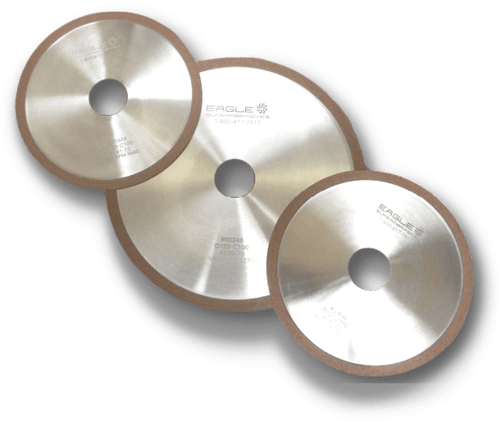
You’ll find cut-off applications across a wide range of industries:
- Oil & Gas – cutting tool joints, casings, and hard-faced materials.
- Aerospace – trimming exotic alloys and heat-resistant materials.
- Medical Manufacturing – precision sectioning of small components.
- Automotive – separating hardened steels and coated parts for further machining.
In these environments, choosing the right abrasive—a CBN wheel or a diamond wheel—can make the difference between fast, efficient cutting and costly downtime.
When to Use CBN Cut-Off Wheels
CBN (Cubic Boron Nitride) is the second hardest material on Earth, second only to diamond. But what makes a CBN grinding wheel unique is its thermal stability when cutting ferrous materials.
You should use CBN wheels when working with:
- High-speed steels (HSS)
- Tool steels
- Alloy steels
- Nickel-based superalloys (Inconel, Hastelloy)
- Cobalt-based alloys (Stellite, etc.)
These materials are common in heavy-duty oilfield, aerospace, and automotive components, where they can withstand extreme mechanical, thermal and chemical conditions. Because diamond chemically reacts with iron at elevated temperatures, CBN abrasive wheels are the superior choice for grinding these hard and ferrous materials.
Advantages of CBN in cut-off:
- Maintains edge sharpness in hardened steels.
- Withstands the high temperatures generated in heavy stock removal.
- Reduces downtime by reducing the frequency of wheel replacements thanks to longer wheel life compared to conventional wheels or diamond wheels used for these materials..
When to Use Diamond Cut-Off Wheels
Diamond wheels outperform all other abrasives when cutting non-ferrous and super-hard materials.
You should use diamond wheels for:
- Carbide tools and inserts
- Ceramics and advanced composites
- Glass and quartz
- Non-ferrous metals (tungsten, titanium, aluminum alloys)
- Thermal spray coatings (HVOF, plasma, etc.)
In these cases, diamond is the hardest material known, delivering clean, burr-free cuts, tight tolerances, and excellent surface finish. With the right grit size and bond system, diamond wheels achieve precision grinding performance while keeping costs low. As confirmed in a study published in the International Journal of Advanced Manufacturing Technology, “a diamond grinding wheel is suitable for precision grinding of difficult-to-cut materials.”
Advantages of diamond in cut-off:
- Extreme wear resistance on hard, brittle materials.
- Faster stock removal with reduced chipping.
- Consistent dimensional accuracy over long production runs is achievable with high-performance grinding techniques.
Choosing the Right Wheel for Your Operation
The choice between a CBN grinding wheel and a diamond grinding wheel in cut-off applications typically comes down to one key question:
Does the material contain iron?
- Yes → Use CBN cut-off wheels
- No → Use diamond cut-off wheels
Pairing the right grinding wheel with the right material ensures maximum productivity, longer wheel life, and lower total cost per part.
At Eagle Superabrasives, we design cut-off wheels in both CBN and diamond to handle the toughest industrial grinding operations. Whether you’re cutting hard-faced oilfield components, sectioning aerospace alloys, or trimming carbide tools, our engineering team can help optimize a wheel specifically for your machine and material.
Frequently Asked Questions
What is the best application of CBN wheels in cut-off applications?
CBN wheels are primarily used in cut-off applications where precision and efficiency are critical. These wheels excel in grinding hard materials, particularly ferrous metals. Their unique composition, primarily featuring boron and nitrogen atoms, allows them to withstand high temperatures and pressures, making them ideal for demanding tasks.
How do CBN wheels remove material effectively?
CBN wheels remove material through a grinding action that is the same as diamond wheels with exposed grits removing materials and being torn out and replaced by new sharp grits. The properties of CBN enable these wheels to maintain sharpness longer than traditional wheels and diamond wheels, allowing for consistent performance in industrial applications. This results in lower wear rates and a longer lifespan, making them a reliable choice for various grinding needs.
What types of grinding tasks are suitable for CBN wheels?
CBN wheels are used for grinding tasks that involve hard materials, such as steel and other ferrous alloys. They are particularly beneficial in precision grinding applications, where the quality of the surface finish is critical. Their ability to maintain a sharp edge ensures that they can handle demanding grinding methods without losing effectiveness.
How do CBN grinding wheels compare to diamond wheels?
While both CBN and diamond wheels are known for their hardness, CBN wheels are specifically designed for grinding ferrous materials. Diamond wheels, on the other hand, excel in grinding non-ferrous materials. The choice between diamond and CBN wheels often depends on the material you are grinding and the specific requirements of the grinding application.
What makes CBN wheels ideal for grinding hard materials?
CBN wheels are composed of boron and nitrogen, which contribute to their exceptional hardness and thermal stability. This allows them to maintain their cutting edge over time, making them suitable for grinding hard materials like high-speed steels and tool steels. Their performance in grinding without excessive wear is a significant advantage in industrial settings.
Can CBN wheels be used in surface grinding applications?
Yes, CBN wheels are highly effective in surface grinding applications as long as the material being ground is compatible. These wheels offer a wide range of grinding capabilities and can achieve a fine finish. Their structure allows for efficient material removal while maintaining dimensional accuracy, which is essential in precision machining.
How does the grit size affect a wheel's performance?
Grit size plays a crucial role in determining their grinding efficiency and finish quality. Finer grits are suitable for achieving a smooth surface finish, while coarser grits are better for aggressive material removal. Selecting the right grit size based on the specific grinding needs is essential for optimal performance.
How do I choose the right CBN wheel for my grinding needs?
Choosing the right CBN wheel depends on several factors, including the type of material you are grinding, the desired finish, and the specific grinding application. Consider the properties of CBN and the characteristics of the wheels available, such as grit size and bond type, to make an informed decision that meets your grinding requirements.