

The oil and gas industry relies on some of the most demanding machining and grinding operations in modern manufacturing. Components such as carbide drill bits, PCD cutting tools, hardened steel valves, pump shafts, downhole drilling equipment, gate valves, wear sleeves, and thermal spray-coated components must withstand extreme pressure, abrasion, corrosion, and heat while maintaining tight dimensional tolerances.
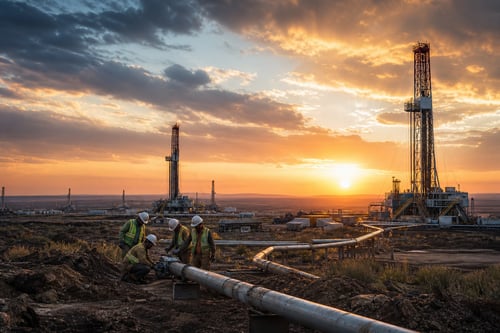
Because of these demanding requirements, selecting the right grinding wheel is critical. The correct wheel can improve surface finish, increase wheel life, reduce grinding temperatures, improve part consistency, and lower overall manufacturing costs. The wrong wheel can lead to excessive heat generation, poor surface quality, premature wheel wear, and costly part rejection.
This guide explores the top five grinding wheel types used throughout the oil and gas industry and explains how to match each wheel to the material, application, and production requirements.
Why Oil and Gas Applications Need the Right Grinding Wheel
Oil and gas components operate in some of the harshest environments, making precision and durability essential throughout the manufacturing process. Choosing the right grinding wheel helps manufacturers produce parts that meet demanding performance and quality standards.
Oilfield Components Are Built From Difficult-to-Grind Materials
Oil and gas manufacturers routinely work with materials specifically engineered to resist wear and survive harsh operating environments. Common materials include:
- Tungsten carbide
- Polycrystalline diamond compact (PCD)
- Hardened alloy steels
- Tool steels
- Thermal spray coatings
- HVOF coatings
- Stellite and hardfacing materials
- Wear-resistant composites
These materials are intentionally difficult to machine and grind. As a result, wheel selection becomes a critical part of the manufacturing process.
Grinding Wheel Choice Affects More Than Surface Finish
Grinding wheel selection affects more than the quality of a single part. In the oil and gas industry, drill bits, valves, downhole drilling tools, pump components, and other precision-ground equipment must perform reliably in harsh operating conditions where premature wear or component failure can contribute to costly downtime.
Studies have found that non-productive time (NPT) may represent up to 20–30% of total drilling expenses. Although grinding wheels are just one component of the manufacturing process, selecting the right diamond or CBN wheel can improve surface finish, maintain tighter dimensional tolerances, extend component life, and help ensure reliable performance in demanding oilfield applications.
Why Custom Wheels Matter in the Oil and Gas Industry
Few oilfield grinding applications are truly standard. Variables such as material hardness, coating type, wheel geometry, coolant availability, machine rigidity, and production volume all influence wheel performance.
Custom grinding wheels allow manufacturers to optimize:
- Abrasive type
- Bond formulation
- Grit size
- Concentration
- Wheel profile
- Coolant compatibility
The result is improved process control and lower cost per part.
What to Consider Before Choosing a Grinding Wheel for Oil and Gas
Selecting the best grinding wheel requires evaluating several factors beyond the workpiece material alone. Understanding these considerations helps improve grinding performance, extend wheel life, and produce more consistent results.
Material Being Ground
The material is often the most important factor when selecting a grinding wheel.
For example:
- Carbide and PCD require diamond abrasives.
- Hardened steels require CBN abrasives.
- Thermal spray coatings often benefit from specialized diamond wheel designs.
Choosing the wrong abrasive can dramatically reduce wheel life and grinding performance.
Component Type and Geometry
Different oilfield components require different wheel configurations.
Examples include:
- Drill bits
- PCD cutters
- Pump shafts
- Valve seats
- Wear sleeves
- Downhole drilling tools
- Complex profile components
Wheel shape and profile must match the grinding operation to maintain dimensional accuracy.
Grinding Application
Grinding operations may include:
- Surface grinding
- Cylindrical grinding
- Profile grinding
- Tool grinding
- OD grinding
- ID grinding
- Form grinding
Each process places unique demands on the wheel.
Bond Type, Grit, and Wheel Structure
Wheel performance is heavily influenced by:
- Bond type
- Abrasive concentration
- Grit size
- Porosity
- Wheel hardness
Properly matching these variables helps maximize stock removal while maintaining surface finish and wheel life.
Wheel #1. Diamond Grinding Wheels for Carbide Drill Bits and PCD Tools
Why Diamond Wheels Are Essential for Oilfield Tool Grinding
Diamond is the preferred abrasive for carbide, PCD, ceramics, and other hard non-ferrous materials commonly used throughout the oil and gas industry.
Diamond abrasives provide exceptional hardness and wear resistance, making them ideal for grinding materials that would rapidly wear conventional abrasives.
Best Oil and Gas Applications for Diamond Grinding Wheels
Diamond wheels are commonly used for:
- Carbide drill bits
- PCD cutters
- PDC drilling tools
- Carbide wear components
- Hardfacing preparation
- Tungsten carbide inserts
- Specialty cutting tools
Diamond grinding wheels are especially important for carbide drill bits, PCD tools, and other wear-resistant components used throughout the oil and gas industry. These tools often require precise grinding performance, strong abrasive durability, and controlled surface finish to handle the demands of drilling applications. For a deeper look at how diamond wheels are used in drill bit manufacturing, regrinding, and oilfield tool production, read our guide to diamond wheels in the downhole drilling industry.
Key Benefits of Diamond Wheels
Benefits include:
- Superior grinding performance on carbide
- Excellent dimensional accuracy
- Long wheel life
- Reduced heat generation
- Consistent cutting action
- Improved surface finish
For carbide and PCD applications, diamond remains the preferred abrasive solution.
Wheel #2. CBN Grinding Wheels for Hardened Steel Oil and Gas Components
Why CBN Is Better Than Diamond for Ferrous Materials
While diamond is ideal for carbide, CBN (cubic boron nitride) is the preferred abrasive for hardened steels and other ferrous materials.
When grinding steel, diamond can chemically react with iron at elevated temperatures, reducing wheel performance and accelerating wear. CBN avoids this issue and delivers superior grinding efficiency on ferrous materials.
Best Oil and Gas Applications for CBN Wheels
Common applications include:
- Gate valves
- Pump shafts
- Valve stems
- Bearing surfaces
- Hardened steel sleeves
- Downhole drilling assemblies
- Precision steel components
CBN wheels excel anywhere hardened steel requires precision grinding.
Key Benefits of CBN Grinding Wheels
Advantages include:
- Excellent thermal stability
- Reduced risk of part burn
- Longer wheel life on steel
- Consistent surface finish
- High material removal rates
- Improved dimensional control
When to Choose a Custom CBN Wheel
Custom CBN wheels are often recommended when manufacturers require:
- Tight tolerances
- Specialized profiles
- High-volume production
- Challenging alloy compositions
- Automated grinding systems
Custom wheel specifications can significantly improve process stability and productivity.
Wheel #3. Resin Bond Diamond and CBN Wheels for Fast Cutting
Why Resin Bond Wheels Are a Versatile Choice
Resin bond wheels remain one of the most widely used wheel types in oilfield manufacturing.
Their ability to provide aggressive cutting action while maintaining good surface quality makes them suitable for a wide variety of grinding operations.
Best Oil and Gas Applications for Resin Bond Wheels
Resin bond wheels are frequently used for:
- Carbide drill bit grinding
- Tool sharpening
- Valve grinding
- Surface grinding
- Cylindrical grinding
- PCD tool manufacturing
- General production grinding
Their versatility makes them a common choice across multiple departments within oilfield manufacturing facilities.
Diamond vs. CBN in Resin Bond Wheels
The choice depends primarily on material:
Diamond Resin Bond Wheels
- Carbide
- PCD
- Ceramics
- Composite materials
CBN Resin Bond Wheels
- Hardened steels
- Tool steels
- Alloy steels
- Ferrous components
Selecting the correct abrasive remains critical for achieving optimal results.
Key Benefits of Resin Bond Wheels
Benefits include:
- Fast cutting action
- Excellent surface finish
- Lower grinding forces
- Reduced thermal damage
- Broad application flexibility
- Cost-effective performance
For many oil and gas manufacturers, resin bond wheels represent the most versatile grinding solution available.
Wheel #4. Vitrified Bond CBN Wheels for Precision Production Grinding
Why Vitrified Bond Wheels Work Well in High-Volume Applications
Vitrified bond CBN wheels are commonly used in production environments where consistency, wheel life, and dimensional accuracy are priorities.
The porous structure of vitrified bonds allows for improved coolant access and chip evacuation, helping maintain cutting performance over long production runs.
Best Oil and Gas Applications for Vitrified CBN Wheels
Common applications include:
- High-volume valve production
- Pump shaft grinding
- Bearing component manufacturing
- Cylindrical grinding operations
- Precision steel components
- Automated grinding cells
These wheels are particularly valuable where repeatability is critical.
Key Benefits of Vitrified Bond Grinding Wheels
Advantages include:
- Excellent form retention
- Long wheel life
- Reduced dressing frequency
- Improved coolant penetration
- Consistent production quality
- Tight tolerance capability
When Vitrified Bond May Be the Best Solution
Vitrified CBN wheels are often the preferred choice when manufacturers need:
- High throughput
- Tight tolerances
- Automated production
- Reduced downtime
- Long wheel life
For many steel grinding applications, vitrified CBN wheels deliver the lowest overall cost per part.
Wheel #5. Metal Bond and Electroplated Wheels for HVOF, Thermal Spray, and Form Grinding
Why Hard Coatings Require Stronger Wheel Designs
Oilfield manufacturers frequently apply HVOF and thermal spray coatings to increase wear resistance and extend component life.
These coatings are often extremely abrasive and require wheel designs capable of maintaining form while grinding difficult surfaces.
Best Oil and Gas Applications for Metal Bond Wheels
Metal bond diamond wheels are commonly used for:
- HVOF coatings
- Thermal spray coatings
- Tungsten carbide coatings
- Hardfaced surfaces
- Wear-resistant components
- Precision profile grinding
Metal bond wheels provide excellent form retention and durability in demanding applications.
Best Oil and Gas Applications for Electroplated Wheels
Electroplated wheels are frequently selected for:
- Complex profiles
- Form grinding
- Tight-radius features
- Special geometry tools
- Low-volume specialty applications
Because electroplated wheels expose a single layer of abrasive, they provide aggressive cutting and excellent profile accuracy.
Key Benefits of Metal Bond and Electroplated Wheels
Benefits include:
- Exceptional shape retention
- High durability
- Strong abrasive retention
- Precision profile capability
- Excellent performance on hard coatings
- Consistent dimensional accuracy
These wheel types are often the preferred solution for the most challenging oilfield grinding applications.
How to Match the Wheel to the Oil and Gas Application
For Carbide and PCD Drill Bits
Recommended solution:
- Diamond abrasive
- Resin bond or metal bond
- Application-specific grit selection
For Hardened Steel Components
Recommended solution:
- CBN abrasive
- Resin bond or vitrified bond
- Optimized wheel structure for coolant flow
For HVOF and Thermal Spray Coatings
Recommended solution:
- Diamond abrasive
- Resin Bond or Metal bond
- Profile-specific wheel design
For Valves, Shafts, and Pump Components
Recommended solution:
- CBN wheels
- Cylindrical grinding configurations
- Vitrified or resin bond systems
For Complex Profiles and Downhole Tools
Recommended solution:
- Electroplated wheels
- Metal bond profile wheels
- Custom-engineered wheel geometry
Diamond vs. CBN Wheels for the Oil and Gas Industry
Diamond and CBN grinding wheels each offer distinct advantages depending on the material and application. Knowing when to use each abrasive helps maximize efficiency while protecting both the wheel and the workpiece.
Choose Diamond for Carbide, PCD, and Non-Ferrous Hard Materials
Diamond wheels should be selected for:
- Tungsten carbide
- PCD
- Ceramics
- Thermal spray coatings
- Hard non-ferrous materials
These applications benefit from diamond's unmatched hardness and wear resistance.
Choose CBN for Hardened Steel and Ferrous Materials
CBN wheels are preferred for:
- Tool steels
- Hardened alloy steels
- Valve components
- Pump shafts
- Bearing surfaces
- Ferrous oilfield components
CBN provides superior grinding performance on steel-based materials.
Why the Wrong Abrasive Can Reduce Wheel Life
Using diamond on steel or CBN on carbide often results in:
- Reduced wheel life
- Poor grinding efficiency
- Increased heat generation
- Higher operating costs
Matching the abrasive to the material is one of the most important factors in grinding success.
Common Problems Caused by the Wrong Grinding Wheel
Selecting the wrong grinding wheel can negatively affect part quality, productivity, and overall manufacturing costs. Below are some of the most common issues that occur when the wheel's abrasive, bond, or specification is not properly matched to the application.
Excessive Heat and Part Burn
Improper wheel selection can generate excessive heat, leading to metallurgical damage and reduced component performance. This is especially critical when grinding hardened steels or heat-sensitive materials, where thermal damage can shorten service life.
Poor Surface Finish
An incorrect wheel may create scratches, chatter marks, or inconsistent finishes. A poor surface finish may also require additional finishing operations, increasing cycle times and production costs.
Short Wheel Life
Using the wrong bond system or abrasive often results in premature wheel wear. Choosing a wheel designed for the workpiece material and grinding conditions helps maximize wheel life and reduce replacement frequency.
Chatter, Loading, and Inconsistent Cutting
Wheel loading and vibration frequently indicate a mismatch between the wheel and the application. These issues can reduce dimensional accuracy, affect surface quality, and make the grinding process less predictable.
Higher Cost Per Part
Ultimately, poor wheel selection increases labor, dressing frequency, scrap rates, and production costs. Over time, these inefficiencies can significantly impact profitability, particularly in high-volume production environments.
Why Custom Grinding Wheels Are Often the Best Choice for Oil and Gas
Standard grinding wheels may work for general applications, but specialized oil and gas components often require a more tailored solution. Custom grinding wheels are engineered to meet specific production requirements, improving both performance and consistency.
Custom Wheels Are Built Around the Application
Custom wheels are designed specifically around the material, machine, coolant, and production requirements.
Custom Bond Systems Improve Grinding Performance
Engineered bond formulations can improve:
- Cutting efficiency
- Heat control
- Surface finish
- Wheel life
Custom Wheel Geometry Supports Complex Oilfield Components
Many oilfield parts require specialized wheel profiles that standard catalog wheels cannot provide.
Custom Superabrasives Help Reduce Cost Per Part
Although custom wheels may have a higher initial purchase price, they often lower total manufacturing costs through:
- Longer wheel life
- Reduced downtime
- Improved consistency
- Lower scrap rates
- Better productivity
Get a Custom Oil and Gas Grinding Wheel Solution From Eagle Superabrasives
Grinding wheels play a critical role in the manufacturing of oil and gas components. Whether grinding carbide drill bits, PCD cutters, hardened steel valves, pump shafts, HVOF coatings, or complex downhole tools, selecting the right wheel directly impacts productivity, quality, and profitability.
Diamond wheels remain the preferred solution for carbide, PCD, and hard non-ferrous materials. CBN wheels provide superior performance on hardened steels and ferrous components. Resin bond, vitrified bond, metal bond, and electroplated wheel technologies each offer unique advantages depending on the application.
At Eagle Superabrasives, we design custom diamond and CBN grinding wheels engineered specifically for demanding oil and gas applications. Our application specialists work directly with manufacturers to optimize abrasive type, bond system, wheel geometry, grit size, and concentration to maximize grinding performance and reduce cost per part.
If you are looking to improve grinding performance on oilfield components, contact our team to discuss a custom grinding wheel solution designed for your application.