

Tungsten carbide coatings are widely used throughout the oil and gas industry because they provide exceptional wear resistance, erosion resistance, and surface durability in some of the harshest operating environments. Components such as valve balls, valve seats, pump sleeves, plungers, choke components, sealing faces, and downhole drilling tools are routinely exposed to abrasive particles, high-pressure fluids, corrosive media, and extreme operating conditions. To extend service life, many of these components are coated with tungsten carbide using HVOF (High Velocity Oxygen Fuel) or other thermal spray coating processes.
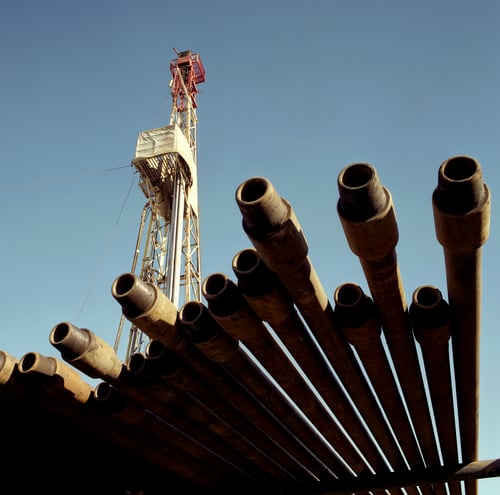
While these coatings dramatically improve component performance, the coating process itself does not typically produce the final surface finish, flatness, or dimensional accuracy required for operation. Precision surface grinding is often necessary to bring the component within specification.
However, grinding a tungsten carbide coating is not the same as grinding a solid carbide component. Coating thickness, adhesion strength, substrate behavior, heat generation, and wheel selection all influence grinding performance and coating integrity. Choosing the correct diamond grinding wheel and process parameters is critical for achieving the required surface finish while protecting the coating.
This guide explores best practices for surface grinding tungsten carbide coatings in oil and gas applications and explains how the right diamond wheel can improve surface quality, wheel life, and overall grinding efficiency.
Why Tungsten Carbide Coatings Are Common in Oil and Gas Components
Tungsten carbide coatings are widely used because they significantly improve wear resistance and extend the service life of critical oilfield components.
The Role of Carbide Coatings in Abrasive Oilfield Environments
Oil and gas equipment operates in conditions that rapidly wear conventional materials. Abrasive drilling fluids, sand particles, corrosive chemicals, high temperatures, and high-pressure flow all contribute to component degradation.
To combat this wear, manufacturers frequently apply tungsten carbide coatings to:
- Valve balls
- Valve seats
- Gate valves
- Pump sleeves
- Pump plungers
- Wear rings
- Choke components
- Downhole drilling tools
- Sealing surfaces
- Bearing surfaces
The resulting coating provides exceptional hardness and wear resistance while helping extend service life in demanding environments.
Why Thermal Spray Coatings Need Precision Finishing
Tungsten carbide coatings are often applied to oil and gas components to improve hardness, wear resistance, erosion resistance, and corrosion protection. However, once a hard WC coating is deposited, the part may no longer meet its original dimensional or surface finish requirements.
Studies on machining and finishing tungsten carbide coatings have shown that applying thick, wear-resistant WC coatings can alter a component's dimensions, geometric accuracy, and surface finish. As a result, precision grinding after the coating process is often necessary to restore critical tolerances. For components such as valves, pumps, chokes, and sealing surfaces, using the appropriate diamond grinding wheel helps achieve the required dimensional accuracy while preserving coating integrity, maintaining surface quality, and supporting long-term performance in demanding operating conditions.
Thermal spray coatings are widely used on oil and gas components because they improve hardness, wear resistance, corrosion protection, and service life in abrasive operating conditions. However, once a tungsten carbide coating is applied, the part often still needs precision finishing to meet final flatness, surface finish, and dimensional requirements. For a broader overview of wheel selection and process setup across different coating types, read Eagle Superabrasives’ guide on grinding thermal spray coatings with diamond wheels.
Why Surface Grinding Quality Affects Coating Performance
Poor grinding practices can negatively impact coating performance long before a component enters service.
Grinding-induced damage may include:
- Surface microcracking
- Edge chipping
- Coating pullout
- Thermal damage
- Poor flatness
- Excessive roughness
These issues can shorten coating life and compromise the performance of critical oilfield components.
The Difference Between Grinding Solid Carbide and Grinding Carbide Coatings
Although both contain carbide, solid carbide and carbide-coated parts require different grinding strategies to achieve the best results.
Solid Carbide Components Are Not the Same as Coated Components
Grinding a solid tungsten carbide component is different from surface grinding a tungsten carbide coating. Solid carbide parts are ground directly as a fully dense material, while carbide-coated components require additional care because the coating has limited thickness, a substrate beneath it, and an adhesion layer that must be protected.
For readers who want a broader foundation before comparing these two applications, Eagle Superabrasives’ guide to tungsten carbide grinding basics explains why carbide is difficult to grind and why diamond wheels are typically required.
Coating Thickness Limits How Much Material Can Be Removed
Unlike solid carbide, a coating has a finite thickness.
Every grinding pass removes valuable coating material. Excessive stock removal can:
- Reduce coating life
- Alter coating performance
- Expose the substrate
- Create costly scrap
Understanding coating thickness before grinding is essential.
Coating Adhesion Must Be Protected During Grinding
The bond between the coating and substrate is critical to long-term component performance.
Excessive grinding forces, aggressive downfeed, and poor wheel selection can stress this interface and contribute to:
- Coating pullout
- Delamination
- Chipping
- Premature coating failure
The Substrate Can Influence Heat and Vibration
The underlying base material also affects grinding behavior.
Different substrate materials absorb heat differently and may respond to grinding forces in unique ways. This makes process control especially important when working with coated components.
Why Diamond Wheels Are the Best Choice for Surface Grinding Tungsten Carbide Coatings
Diamond wheels provide the hardness and cutting efficiency needed to grind carbide coatings with precision and consistency.
Diamond Abrasive Grains Cut Carbide Efficiently
Diamond is the preferred abrasive for tungsten carbide coatings because it is significantly harder than the carbide being ground.
Sharp diamond grains cut efficiently rather than rubbing across the coating surface, helping reduce grinding forces while maintaining material removal rates.
Diamond Wheels Help Control Surface Finish
Surface finish requirements on valve seats, sealing surfaces, and precision wear components are often demanding.
Diamond wheels help achieve:
- Consistent surface roughness
- Improved flatness
- Better dimensional accuracy
- Reduced surface defects
Diamond Wheels Improve Wheel Life and Cost Per Part
When properly specified, diamond wheels typically provide:
- Longer wheel life
- Lower dressing frequency
- Reduced downtime
- Improved process consistency
These benefits often translate directly into a lower cost per part.
Why CBN Is Not the Primary Choice for Tungsten Carbide Coatings
CBN wheels are generally not recommended for grinding tungsten carbide coatings.
CBN abrasives are designed primarily for hardened steels and ferrous materials. Tungsten carbide coatings respond much more effectively to diamond abrasives, which provide superior cutting efficiency, improved wheel life, and better surface finish.
For carbide-rich HVOF and thermal spray coatings, diamond remains the preferred abrasive solution.
Choosing the Right Diamond Wheel Bond for Carbide Coating Grinding
The bond type plays a major role in grinding performance, wheel life, and the quality of the finished surface.
Resin Bond Diamond Wheels for Controlled Cutting and Finish
Resin bond diamond wheels are often the preferred starting point for grinding tungsten carbide coatings.
They offer:
- Free-cutting action
- Excellent surface finish
- Reduced grinding forces
- Good heat control
- Broad application flexibility
For many oil and gas manufacturers, resin bond wheels provide the best balance between wheel life, finish quality, and productivity.
Metal Bond Diamond Wheels for Longer Wheel Life and Form Holding
Metal bond diamond wheels are commonly selected when:
- Form retention is critical
- Coatings are highly abrasive
- Long wheel life is required
- Profile accuracy must be maintained
These wheels are frequently used on difficult carbide coating applications where wheel wear must be minimized.
Vitrified Bond Diamond Wheels for Precision Grinding Efficiency
Vitrified bond diamond wheels are less common than resin bond wheels for general carbide coating grinding, but they can provide advantages in specialized applications.
Their open structure allows:
- Improved coolant access
- Better chip evacuation
- Consistent cutting performance
- Excellent dimensional control
In precision production environments, vitrified diamond wheels may offer significant process benefits.
Electroplated Diamond Wheels for Aggressive Cutting or Special Forms
Electroplated diamond wheels are often selected for:
- Profile grinding
- Special forms
- Complex geometries
- Tight-radius features
Because the abrasive layer is permanently plated to the wheel surface, electroplated wheels maintain profile accuracy exceptionally well.
However, they are generally not the first choice for large-area surface grinding because they cannot be conventionally dressed and refreshed like resin bond wheels.
Why Custom Wheel Bond Selection Matters
No single bond works best for every carbide coating application.
Factors such as:
- Coating composition
- Surface finish requirements
- Production volume
- Machine capability
- Coolant availability
all influence the optimal bond selection.
Diamond Wheel Selection Factors for Tungsten Carbide Coatings
Selecting the right wheel specification helps balance material removal, surface finish, and overall grinding efficiency.
Grit Size: Balancing Material Removal and Surface Finish
Coarser grits generally provide:
- Faster stock removal
- Higher productivity
Finer grits typically produce:
- Better surface finish
- Lower roughness values
- Improved appearance
Selecting the proper grit requires balancing productivity and finish requirements.
Diamond Concentration and Grinding Efficiency
Diamond concentration affects both wheel life and cutting behavior.
Higher concentrations often improve wheel life, while lower concentrations may promote freer cutting under certain conditions.
Wheel Hardness and Bond Openness
An overly hard wheel may glaze or load.
An overly soft wheel may wear prematurely.
The bond must be selected to balance wheel life and cutting efficiency.
Wheel Shape and Contact Area
Contact area directly affects:
- Grinding pressure
- Heat generation
- Coolant access
Proper wheel geometry helps maintain stable grinding conditions.
Wheel Speed and Machine Capability
Wheel speed should always be matched to:
- Bond type
- Machine rigidity
- Surface finish requirements
- Material removal goals
Improper wheel speed can significantly reduce grinding performance.
Best Grinding Parameters for Surface Grinding Tungsten Carbide Coatings
Using appropriate grinding parameters helps minimize heat generation while protecting the coating from unnecessary damage.
Use Controlled Downfeed to Protect Coating Integrity
Aggressive downfeed can increase grinding forces and generate excessive heat.
Controlled downfeed helps protect:
- Coating adhesion
- Surface quality
- Dimensional accuracy
Match Table Speed to the Wheel and Coating
Table speed should be optimized for the coating and wheel specification.
Excessively high speeds can increase heat generation and compromise surface quality.
Use Crossfeed to Avoid Localized Overheating
Proper crossfeed promotes even wheel wear and reduces localized thermal loading.
Add Spark-Out for Flatness and Finish
Spark-out passes often improve:
- Flatness
- Surface finish
- Dimensional consistency
without removing significant additional material.
Monitor Material Removal, Not Just Cycle Time
Maximizing stock removal is not always the most efficient approach.
Protecting coating integrity is often more valuable than minimizing cycle time.
Coolant Best Practices for Diamond Grinding Carbide Coatings
Effective coolant application is essential for controlling temperature and maintaining stable grinding conditions.
Coolant Controls Heat at the Grinding Zone
Heat management is one of the most important aspects of carbide coating grinding.
Proper coolant application helps reduce thermal damage and improve wheel performance.
Coolant Must Reach the Wheel-Work Interface
Simply flooding the machine is not enough.
Coolant must effectively reach the grinding zone where cutting occurs.
Filtration Matters When Grinding Carbide Coatings
Carbide grinding generates extremely fine abrasive particles.
Effective filtration helps:
- Improve coolant performance
- Reduce wheel loading
- Improve finish consistency
- Extend coolant life
Coolant Helps Prevent Wheel Loading
Wheel loading can occur when grinding pressure becomes excessive, coolant delivery is inadequate, bond selection is too hard, or grit size is too fine for the application.
Proper coolant delivery helps flush grinding debris away from the wheel surface and maintain cutting efficiency.
Common Surface Grinding Problems With Tungsten Carbide Coatings
Understanding common grinding issues makes it easier to identify their causes and prevent costly rework.
Coating Pullout
Often caused by:
- Excessive grinding pressure
- Poor wheel selection
- Excessive heat generation
Chipping at Coating Edges
Sharp edges are particularly vulnerable during grinding.
Reducing grinding aggression often helps minimize chipping.
Microcracking or Heat Checking
Excessive heat can damage coating integrity even when defects are not immediately visible.
Poor Surface Finish or Streaking
Surface quality issues often indicate:
- Wheel loading
- Improper grit selection
- Poor coolant delivery
Excessive Wheel Wear
Premature wheel wear may indicate that the bond is too soft or the wheel specification is not optimized for the coating.
Slow Material Removal
Slow cutting may indicate:
- Wheel glazing
- Bond hardness issues
- Insufficient wheel exposure
Oil and Gas Applications That Benefit From Better Diamond Wheel Practices
Many oilfield components depend on precision grinding to meet demanding wear, sealing, and dimensional requirements.
Valve Balls, Seats, and Gates
These sealing surfaces require excellent finish quality and dimensional accuracy.
Pump Sleeves, Plungers, and Wear Rings
Improved grinding practices help maximize wear performance and service life.
Choke and Flow-Control Components
These components frequently experience severe erosion and benefit from high-quality carbide coatings.
Drill and Downhole Components
Precision grinding supports coating performance in abrasive drilling environments.
Sealing and Bearing Surfaces
Surface finish quality directly influences sealing performance and component reliability.
How to Avoid Damage When Grinding HVOF and Thermal Spray Carbide Coatings
Preventing coating damage starts with selecting the proper grinding approach for the specific coating system being used.
Confirm Coating Type Before Selecting a Wheel
Different carbide coatings may require different wheel specifications.
Confirm Coating Thickness and Allowable Stock Removal
Always understand how much coating can safely be removed.
Use a Wheel That Cuts Freely
Free-cutting wheels reduce heat and grinding forces.
Dress the Wheel Before Performance Declines
Resin bond wheels and many vitrified wheels benefit from periodic dressing to maintain cutting performance. Metal bond wheels may require specialized conditioning methods, while electroplated wheels generally cannot be conventionally dressed.
Avoid Aggressive First Passes on Coated Parts
Heavy initial cuts increase the risk of coating damage and unnecessary heat generation.
Practical Checklist Before Surface Grinding Tungsten Carbide Coatings
Reviewing key application details before grinding helps reduce errors and achieve more consistent results.
Coating Information to Confirm
- Coating type
- Coating thickness
- Coating hardness
- Binder chemistry
Grinding Requirements to Confirm
- Surface finish requirements
- Flatness requirements
- Stock removal targets
- Tolerance requirements
Machine and Process Details to Confirm
- Machine type
- Coolant system
- Available horsepower
- Wheel speed capability
Wheel Specification Details to Confirm
- Bond type
- Grit size
- Diamond concentration
- Wheel geometry
Get a Custom Diamond Wheel for Tungsten Carbide Coating Grinding from Eagle Superabrasives
Surface grinding tungsten carbide coatings requires more than simply selecting a diamond wheel and beginning the grinding process. Coating thickness, adhesion strength, substrate behavior, coolant delivery, wheel specification, and grinding parameters all influence the final result.
By combining the right diamond abrasive, bond system, grit size, concentration, and process controls, manufacturers can improve surface finish, protect coating integrity, reduce wheel wear, and lower overall cost per part.
At Eagle Superabrasives, we engineer custom diamond grinding wheels specifically for HVOF coatings, thermal spray carbide coatings, valve components, pump parts, sealing surfaces, downhole tools, and other demanding oil and gas applications. Our team works directly with customers to develop wheel specifications optimized for the coating, machine, coolant system, production requirements, and finish goals.
If you are grinding tungsten carbide coatings and looking to improve consistency, wheel life, or surface quality, reach out to our team to discuss a custom diamond wheel solution built for your application.