

Precision surface grinding gets more challenging when your material is not metal, but a layered composite built with fibers, resin, fillers, or ceramic reinforcement. If you work with carbon fiber, fiberglass, G10/FR4, or other advanced composites, you already know how quickly poor wheel selection or aggressive grinding conditions can lead to fiber pullout, delamination, heat damage, and inconsistent finishes.
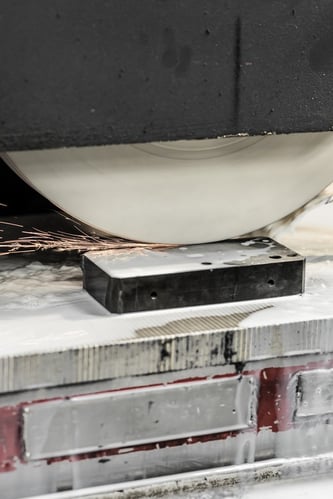
This guide explains how to surface grind composite materials more effectively, with a focus on diamond wheel selection, process control, and practical finishing techniques.
Understanding Composite Materials in Surface Grinding Applications
Composite materials are widely used in modern manufacturing because they offer high strength, low weight, corrosion resistance, and excellent structural performance. Industries such as aerospace, automotive, energy, medical, and advanced industrial manufacturing increasingly rely on composite materials to improve efficiency and performance in demanding applications.
However, precision grinding composite materials presents unique challenges compared to traditional metals. Achieving consistent surface finish, flatness, and dimensional accuracy requires careful control of grinding wheel selection, process parameters, coolant strategy, and machine stability.
Structure of Composite Materials and Its Impact on Grinding
Unlike homogeneous metals, composite materials consist of multiple material phases combined into a single structure. Common composite materials include:
- Carbon fiber reinforced polymers (CFRP)
- Fiberglass composites
- Reinforced plastics
- Ceramic matrix composites
- Kevlar composites
- G10/FR4 materials
- Carbon-carbon composites
- Hybrid composite structures
These materials typically combine hard reinforcing fibers with a softer matrix material. During grinding, the different material properties can create uneven cutting behavior, varying heat generation, and inconsistent material removal.
Fiber orientation, resin content, and composite density all influence grinding performance and surface quality.
Common Grinding Challenges in Composite Materials
Surface grinding of composite materials presents unique challenges that directly impact both process efficiency and final surface quality. Unlike homogeneous metals, composites consist of reinforcing fibers and a softer matrix, leading to uneven material removal and increased susceptibility to damage.
Studies on composite machining show that surface damage, rapid wheel wear, and abrasive buildup are key factors that reduce grinding performance and make it harder to achieve a consistent, high-quality finish. These challenges can result in defects such as fiber pullout, delamination, and poor surface finish if not properly controlled. Addressing these issues requires a combination of optimized grinding parameters, proper coolant application, and, most importantly, the correct grinding wheel selection tailored to the specific composite material.
Common grinding challenges include:
- Fiber pullout
- Delamination
- Resin smearing
- Thermal damage
- Abrasive loading
- Surface tearing
- Inconsistent flatness
- Excessive wheel wear
Successfully grinding composite materials requires balancing material removal efficiency with process stability and surface integrity.
How Fiber Orientation Affects Grinding Performance
Fiber orientation has a major impact on composite grinding behavior. Grinding parallel to reinforcing fibers may produce very different cutting forces and surface characteristics compared to grinding across fiber directions.
Because composite materials are anisotropic, grinding performance can vary depending on:
- Fiber direction
- Weave pattern
- Layer orientation
- Fiber density
- Resin distribution
Improper grinding conditions may increase the risk of:
- Fiber breakout
- Delamination
- Surface tearing
- Edge chipping
- Inconsistent surface finish
Understanding fiber orientation is important for selecting grinding parameters and wheel specifications that maintain surface integrity and dimensional consistency.
Key Objectives in Precision Surface Grinding of Composite Materials
Precision surface grinding is about controlling how the composite responds under pressure and abrasive contact. The main goal is to achieve the required geometry and finish without damaging the fiber structure or weakening the part.
Achieving Flatness and Dimensional Accuracy
Many composite applications require extremely flat surfaces and tight dimensional tolerances. Components used in aerospace assemblies, precision tooling, and structural systems often demand consistent geometry and repeatable dimensional control.
Maintaining flatness during grinding can be difficult because composite materials may respond differently to grinding pressure and thermal effects than traditional metals.
Surface Finish Requirements and Quality Targets
Surface finish quality directly impacts component performance, assembly fit, bonding strength, and appearance.
Depending on the application, manufacturers may require:
- Smooth surface finishes
- Uniform texture
- Reduced fiber exposure
- Minimal surface defects
- Controlled roughness values
- Consistent waviness profiles
Improper grinding conditions can create visible defects and compromise part quality.
Maintaining Tight Tolerances in Composite Components
Precision composite components frequently require tight tolerances to ensure proper assembly and performance. Grinding instability, vibration, thermal expansion, or wheel wear can negatively affect dimensional consistency throughout production runs.
Consistent grinding conditions are critical for repeatable results.
Grinding Wheel Selection for Composite Materials
The grinding wheel has a direct impact on surface finish, heat control, wheel life, and defect prevention. Because composites can be highly abrasive and sensitive to damage, the wheel specification should be matched to the material structure, finish requirement, and production conditions.
Why Diamond Grinding Wheels Are Often Preferred for Composites
Composite materials often contain highly abrasive fibers that rapidly wear conventional abrasive wheels. Diamond grinding wheels provide the hardness and cutting efficiency necessary to process many of these materials effectively while maintaining surface quality and dimensional control.
Diamond grinding wheels help:
- Improve cutting efficiency
- Reduce grinding forces
- Extend wheel life
- Improve surface finish
- Minimize heat generation
- Reduce fiber damage
Diamond abrasives are particularly effective when grinding carbon fiber, fiberglass, ceramic-filled composites, and other abrasive materials.
Bond Type Selection for Surface Grinding Applications
Selecting the appropriate bond type is critical for achieving the desired surface finish and maintaining process stability when surface grinding composite materials.
Resin bond grinding wheels are often preferred for precision finishing due to their ability to reduce heat generation and produce smoother surface finishes. Electroplated diamond wheels provide aggressive cutting action and are ideal for applications requiring high material removal rates or complex wheel geometries.
Each bond type offers different advantages depending on the composite structure, grinding conditions, and surface finish requirements.
For a deeper comparison of these bond systems, explore electroplated and resin bond diamond wheels for composite grinding.
Grit Size and Its Effect on Surface Finish and Material Removal
Diamond grit size strongly influences grinding behavior.
Coarser grits typically:
- Increase material removal rates
- Improve cutting aggression
- Reduce grinding forces
Finer grits generally:
- Produce smoother finishes
- Reduce fiber pullout
- Improve surface consistency
- Minimize surface damage
The optimal grit size depends on:
- Composite material type
- Surface finish requirements
- Production goals
- Material removal requirements
Open Wheel Structures and Chip Clearance
Wheel structure and porosity play a major role in composite grinding performance. Open wheel structures help improve:
- Swarf evacuation
- Chip clearance
- Coolant penetration
- Heat reduction
- Resistance to wheel loading
Composite grinding often generates fine abrasive debris and resin particles that can clog the wheel surface and reduce cutting efficiency. Optimized wheel structures help maintain stable cutting action and improve overall process consistency.
Surface Grinding Process Parameters for Precision Finishing
Feed rate, depth of cut, wheel speed, and spark-out all need to work together to control grinding forces and protect the composite surface.
Feed Rate Control for Composite Materials
Feed rate directly impacts grinding pressure, heat generation, and surface quality.
Excessive feed rates may lead to:
- Delamination
- Fiber breakout
- Surface tearing
- Increased vibration
- Poor finish quality
Controlled feed rates help maintain process stability and improve surface consistency.
Depth of Cut and Incremental Material Removal
Composite materials generally respond better to controlled incremental material removal rather than aggressive grinding passes.
Reducing depth of cut can help:
- Lower grinding forces
- Reduce thermal stress
- Improve surface finish
- Minimize damage to the composite structure
Wheel Speed and Grinding Efficiency
Wheel speed affects cutting action, surface quality, and heat generation.
Improper wheel speeds may result in:
- Excessive heat
- Resin smearing
- Fiber damage
- Increased wheel wear
Optimized wheel speeds help improve grinding efficiency while maintaining stable cutting conditions.
Spark-Out and Finishing Passes
Spark-out passes are often important in precision composite grinding applications because they help:
- Improve surface finish
- Reduce residual stresses
- Improve flatness
- Maintain dimensional accuracy
Finishing passes also help stabilize the grinding process before final measurement.
Machine Rigidity and Vibration Control
Composite materials are highly sensitive to vibration and grinding instability. Machine rigidity and spindle stability directly influence:
- Surface finish quality
- Dimensional consistency
- Fiber damage
- Chatter formation
- Grinding forces
Poor machine stability can increase delamination risk and reduce process repeatability. Maintaining rigid machine conditions and minimizing vibration are essential for achieving precision grinding results.
Managing Heat and Thermal Effects in Composite Grinding
Heat control is one of the most important factors in composite grinding because many matrix materials can soften, smear, burn, or degrade under excessive temperature. Managing heat starts with understanding where it comes from and how wheel selection, coolant use, and grinding pressure affect the process.
Sources of Heat in the Grinding Process
Heat generation during grinding primarily comes from:
- Friction at the grinding interface
- Abrasive interaction with fibers
- Wheel loading
- Excessive grinding pressure
Composite materials are often sensitive to thermal damage because the matrix material may soften or degrade at elevated temperatures.
Preventing Thermal Damage in Composite Materials
Excessive heat can lead to:
- Matrix degradation
- Resin burning
- Surface discoloration
- Delamination
- Distortion
- Reduced structural integrity
Reducing grinding temperatures is critical for maintaining part quality.
Resin Smearing and Abrasive Loading
Composite grinding often creates resin smearing and abrasive loading conditions that reduce wheel performance. As resin softens during grinding, material can redeposit onto the wheel surface and clog abrasive exposure areas.
This may result in:
- Reduced cutting efficiency
- Increased heat generation
- Poor surface finish
- Higher grinding forces
- Accelerated wheel wear
Optimized bond systems and open wheel structures help reduce loading and maintain cutting performance.
Role of Abrasive Selection in Heat Reduction
Proper abrasive selection helps improve cutting efficiency and reduce friction during grinding operations.
Diamond grinding wheels with optimized bond systems and grit structures help:
- Reduce grinding forces
- Improve chip clearance
- Lower heat generation
- Improve surface quality
Coolant Strategy and Process Stability
The right approach depends on the composite material, machine setup, part requirements, and whether wet or dry grinding is more suitable.
Coolant Application for Surface Grinding
Proper coolant application plays a major role in composite grinding performance.
Coolant helps:
- Reduce heat generation
- Flush debris from the grinding zone
- Improve wheel life
- Reduce abrasive loading
- Improve surface finish
Consistent coolant delivery is especially important when grinding heat-sensitive composite materials.
Dry Grinding vs Wet Grinding for Composite Materials
Some composite grinding applications use wet grinding processes, while others may rely on dry grinding with vacuum extraction systems.
Wet grinding may help:
- Reduce heat
- Improve surface finish
- Extend wheel life
- Minimize airborne dust
Dry grinding may be preferred in applications where moisture sensitivity or downstream bonding requirements are concerns.
The optimal grinding approach depends on:
- Composite material type
- Part geometry
- Surface quality requirements
- Environmental considerations
Dust Extraction and Contamination Control
Grinding composite materials can generate large amounts of abrasive dust and airborne fibers. Carbon fiber composites in particular may produce conductive dust particles that create contamination concerns for machines and surrounding equipment.
Proper dust extraction and filtration systems help:
- Improve operator safety
- Reduce airborne contamination
- Protect machine components
- Improve process cleanliness
- Maintain coolant quality
Dust management is especially important in aerospace, electronics, and precision manufacturing environments.
Maintaining Process Consistency and Efficiency
Stable grinding conditions are essential for repeatable results.
Factors affecting process consistency include:
- Machine rigidity
- Wheel condition
- Coolant flow
- Feed consistency
- Wheel balance
- Thermal stability
Maintaining consistent grinding conditions helps reduce variation and improve surface quality across production runs.
Achieving Superior Surface Finish and Precision Surface Quality
A high-quality surface finish comes from controlling the full grinding system, not just choosing a finer grit. Wheel specification, machine stability, coolant delivery, and grinding parameters all need to support consistent cutting action with minimal fiber disruption.
Factors That Influence Surface Finish in Composite Grinding
Surface finish quality depends on multiple interacting variables, including:
- Grinding wheel specification
- Grit size
- Feed rate
- Wheel speed
- Coolant strategy
- Composite material structure
- Machine stability
Optimizing these variables helps improve surface consistency and reduce defects.
Minimizing Defects and Improving Surface Quality
Common composite grinding defects include:
- Fiber pullout
- Surface tearing
- Delamination
- Resin smearing
- Surface roughness variation
Application-specific grinding wheel selection and optimized process control help minimize these issues while improving overall surface quality.
Common Mistakes in Surface Grinding Composite Materials
Many surface grinding problems in composites come from treating them like metals or using general-purpose grinding practices. Avoiding the most common mistakes can reduce scrap, improve wheel life, and help maintain tighter control over finish, flatness, and dimensional accuracy.
Incorrect Grinding Wheel Selection
Using the wrong grinding wheel can lead to:
- Excessive wheel wear
- Poor surface finish
- Thermal damage
- Reduced productivity
Diamond grinding wheels are often necessary for abrasive composite materials.
Excessive Feed Rate or Depth of Cut
Aggressive grinding parameters can increase:
- Grinding forces
- Heat generation
- Fiber damage
- Delamination risk
Controlled material removal is critical for maintaining composite integrity.
Poor Heat Management and Coolant Use
Inadequate coolant application can cause:
- Thermal damage
- Resin degradation
- Wheel loading
- Reduced surface quality
Proper coolant strategy is essential for process stability.
Ignoring Process Consistency and Machine Setup
Machine instability, vibration, or poor setup can negatively affect:
- Flatness
- Surface finish
- Dimensional accuracy
- Repeatability
Precision grinding requires stable machine conditions and consistent process control.
Improve Surface Finish and Precision in Composite Materials with Custom Grinding Solutions
Grinding composite materials successfully requires more than standard grinding wheels and generic process settings. Achieving superior surface finish, flatness, and dimensional consistency often depends on selecting application-specific grinding solutions optimized for the composite structure and grinding conditions.
Eagle Superabrasives specializes in custom-engineered diamond grinding wheels designed for demanding composite grinding applications. By optimizing bond type, grit size, wheel structure, and grinding performance for each application, Eagle Superabrasives helps manufacturers improve surface quality, reduce defects, extend wheel life, and maintain precision finishing performance across advanced composite manufacturing operations. Contact our team and let’s discuss your custom grinding needs.