

Selecting the right grinding wheel for saw grinding is one of the most important decisions a manufacturer or sharpening shop can make. Whether you’re producing carbide-tipped circular saw blades or band saw blades, the grinding wheel determines edge sharpness, cutting efficiency, cycle time, and consistency from blade to blade.
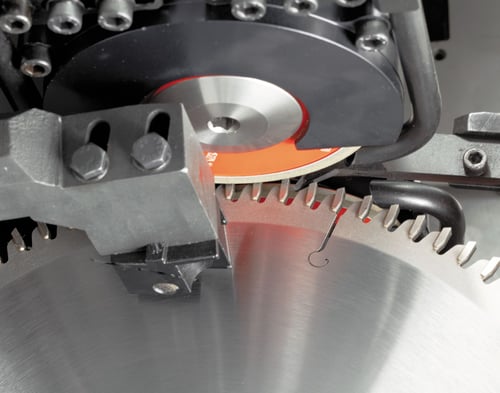
Small variations in wheel specification can dramatically impact performance—making proper wheel selection both a quality and profitability decision.
Why Choosing the Right Wheel Matters
Why Precision Grinding is essential to Saw Performance
Saw blade geometry is unforgiving. Tooth top angles, side clearance, face angles, and gullet shapes must remain consistent throughout the grinding process. Using the wrong wheels for grinding saws can cause:
- Tooth chipping
- Poor blade cut quality
- Excessive heat
- Premature blade failure
- Increased scrap and rework
The right grinding wheel ensures precision and long-term blade performance.
Understanding Abrasive Materials for Blade Grinding
Saw manufacturers typically choose between two superabrasives for blade grinding:
- Diamond – for carbide-tipped saw blades
- CBN – for HSS and ferrous Band saw blades and Cold Saws
Matching the abrasive to the blade material is the foundation of choosing the right grinding wheel for saw production.
Abrasive Selection: Diamond for Carbide, CBN for HSS
Why Diamond Is the Only Choice for Tungsten Carbide Tipped Blades
Carbide is exceptionally hard (near 9 on the Mohs scale) and brittle, requiring the sharp, cool-cutting performance that only diamond grinding wheels provide. Diamond is the hardest material known and is the only suitable abrasive for grinding extremely hard materials like tungsten carbide. These wheels deliver the necessary hardness for a clean, sharp cutting edge and an excellent surface finish:
- Clean, sharp cutting action
- Reduced grinding temperatures
- Minimal micro-chipping
- Excellent wheel form stability
This is why diamond wheels dominate the market for carbide tipped saw blades.
And carbide’s dominance in the saw blade industry reinforces the importance of optimizing these wheels. According to Data Bridge Market Research, carbide saw blades represented 49.6% of total saw blade revenue in 2024, driven by their durability, high cutting efficiency, and ability to cut wood, composites, and non-ferrous metals.
→ Source: Global Saw Blades Market Report – Data Bridge Market Research
Because carbide is the largest share of the global market, selecting the correct diamond grinding wheels for saw blade manufacturing is more important than ever for blade manufacturers and sharpening shops.
When CBN Is the Ideal Abrasive for High-Speed Steel (HSS) Blades
Diamond breaks down chemically when exposed to steel at elevated temperatures, making it unsuitable for grinding ferrous metals. This is where CBN becomes the ideal choice. The CBN grinding wheel possess superior thermal resistance and chemical inertness when working with steel alloys. CBN grinding wheels deliver:
- Superior thermal resistance
- High stock removal rates on steel
- Excellent form holding
This makes CBN the right tool and abrasive for wheels for band saws and cold saws made from high-speed steel or other ferrous materials.
Avoiding Misapplication: Limitations of Diamond and CBN
Choosing the wrong abrasive dramatically impacts productivity and surface finish:
- Diamond must not be used on steel → rapid wheel degradation
- CBN must not be used on carbide → extremely slow cutting and poor finish
Choosing the wrong abrasive dramatically impacts productivity.
Critical Wheel Specifications That Determine Grinding Performance
Beyond choosing the correct abrasive (diamond or CBN), the physical specifications of the grinding wheel should be considered. Small details, like grit size and bond type, dramatically affect the quality of the cutting edge and the speed of the grinding task.
Selecting the Correct Grit Size for Sharpening vs. Finishing
Grit selection influences edge quality and overall grinding behavior. The size of the abrasive particles determines the depth of the cut and the resulting surface finish:
- 80–150 grit – Used for rough grinding and shaping. The coarser grit allows for high stock removal rates when the blade requires significant material reduction.
- 400–1200 grit – Used for sharpening and finishing. A fine grit is essential for achieving the mirror-like surface finish and sharp cutting edge required for precision saw blades.
The right grit ensures clean, consistent tooth geometry in wheels for saw blade sharpening.
Bond Types for Saw Blade Grinding (Resin and Vitrified)
Saw blade grinding relies primarily on two bond systems:
Resin bond diamond wheels
- The industry standard for carbide saw blades
- Delivers cool cutting and excellent edge quality
- Reduces micro-chipping
Vitrified CBN wheels
- Used for grinding steel Band saw blades and Cold Saws
- High rigidity and long life
Wheel Shapes for Saw Blade Grinding (FEPA)
Different grinding operations require different wheel geometries:
- 12A2 (dish wheel) – for top and face grinding
- 4A2 (saucer wheel) – used for side grinding
These shapes make it possible to maintain consistent tooth geometry across automated grinding cycles.
Concentration, Core Type, and Other Variables
Other wheel specifications that matter include:
- Abrasive concentration – determines cutting aggressiveness
- Core material (steel or aluminum) – affects heat management and vibration
- Wheel tolerances and geometry – impact consistency and accuracy
Each factor must be chosen based on machine type and saw blade design.
Grinding Wheels for Tungsten Carbide Tipped (TCT) Saw Blades
Material Properties of Carbide That Dictate Wheel Choice
Tungsten carbide is an extremely hard material and is often classified as an industrial ceramic due to its composition and hardness. This material forms the cutting tool tip on the saw blades. Improper grinding of this material, however, can create issues due to its nature as a brittle material:
- Micro-fractures
- Chipped edges
- Heat damage at the braze line
Using the correct diamond wheels for saw blades prevents these issues.
Why Diamond Wheels Deliver the Best Performance on Carbide
Diamond wheels provide:
- High precision edge formation
- Cool cutting action
- Consistent tooth geometry
- Long wheel life
These traits make diamond wheels essential for carbide saw manufacturing.
Managing Heat and Preventing Edge Chipping
Optimal carbide grinding requires:
- Proper coolant flow
- Appropriate grit selection
- Resin bond wheels for heat reduction
- Regular dressing to maintain wheel sharpness
These factors help diamond wheels for saw blades maintain performance and prolong blade life.
Grinding Wheels for Band Saw Blades
Why CBN Outperforms Diamond When Grinding Steel
CBN wheels maintain thermal and chemical stability when grinding ferrous materials. Benefits include:
- Resistance to burning
- Fast stock removal
- Exceptional form holding
This is why CBN is the correct abrasive for wheels for band saws made from HSS or tool steel.
Bond and Grit Considerations for HSS Blade Sharpening
For sharpening HSS saw blades:
- Vitrified CBN wheels offer stiffness and longevity
- Resin bond CBN may be used in certain applications
- 80–400 grit is typical depending on roughing vs. finishing
Achieving Form Holding and Edge Integrity
CBN wheels are highly stable, making them ideal for industrial saw sharpening systems that require tight tolerances.
Machine & Operational Factors That Influence Grinding Success
Optimizing Wheel Speed, Feed Rate, and Grinding Parameters
For both diamond and CBN wheels for saw applications, optimal parameters include:
- Consistent wheel speeds (within machine ratings)
- Controlled feed rates to avoid burning
- Shallow finishing passes
Dialing in these parameters improves productivity and wheel life.
Proper Coolant Selection and Delivery for Heat Control
Coolant is essential for:
- Reducing grinding temperature
- Preventing wheel glazing
- Extending wheel life
- Protecting carbide and steel edges
Using clean, high-quality coolant—such as Eagle’s GrindClean—can significantly boost grinding performance.
Wheel Dressing and Truing for Maximum Tool Life and Accuracy
Routine wheel maintenance ensures:
- A sharp cutting surface
- Reduced heat generation
- Stable geometry
- Longer wheel and blade life
This is essential for both diamond and CBN wheels for saw blade grinding.
A Clear Path to Selecting the Right Grinding Wheel
Key Takeaways
Diamond wheels are mandatory for carbide saw blades.
CBN wheels are mandatory for Band Saws and cold saws.
- The right bond, grit, and wheel shape ensure optimal performance.
- Machine parameters and coolant are equally critical.
- Custom-engineered wheels deliver the best results.
Partnering with Grinding Wheel Experts
Every saw blade, machine, and production workflow is unique. Eagle Superabrasives engineers custom wheels for saw blade grinding tailored to your material, geometry, and operational requirements—improving edge quality, speed, and wheel life.
Our engineering team works directly with manufacturers and sharpening shops to design wheels that outperform off-the-shelf solutions.