

Why Precision Dicing Is Critical for Glass and Ceramic Substrates
The Risks of Cutting Hard and Brittle Materials
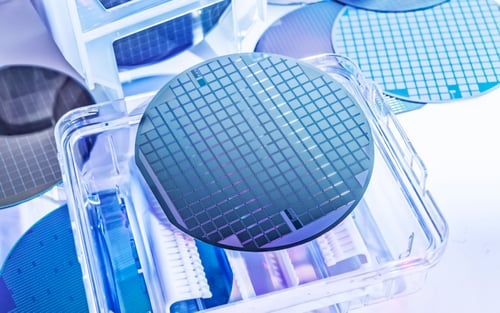
Glass and ceramic substrates are among the most challenging materials to process due to their brittle nature. Unlike ductile materials, they do not deform under stress—they fracture.
This makes them highly sensitive to:
- Edge chipping
- Micro-cracking
- Subsurface damage
Even minor inconsistencies in the dicing process can significantly impact part quality and yield.
What Happens When Dicing Is Not Optimized
When dicing parameters or blade specifications are not properly aligned, manufacturers often experience:
- Increased scrap rates
- Poor edge quality
- Reduced dimensional accuracy
- Inconsistent production results
In high-precision industries, these issues directly affect both cost and performance.
Understanding Diamond Dicing Blades and Their Role in Precision Cutting
What Defines a Diamond Dicing Blade
A diamond dicing blade is engineered specifically for high-precision cutting of hard and brittle materials.
Unlike general-purpose cutting tools, it is designed with:
- Controlled diamond grit size
- Optimized bond system
- Ultra-thin blade geometry
These factors work together to deliver clean, consistent cuts.
Why Diamond Is Required for Ceramic and Glass Dicing
Diamond is the only abrasive capable of effectively cutting glass and ceramic materials while maintaining:
- Sharp cutting edges
- High wear resistance
- Consistent performance under load
Key Components That Influence Performance
Dicing blade performance is controlled by:
- Grit size and concentration
- Bond type
- Blade thickness
- Operating conditions
Each variable must be aligned with the material and application.
Key Differences Between Glass and Ceramic Substrate Dicing
Glass Substrate Dicing Challenges
Glass materials are prone to:
- Edge chipping
- Crack propagation
- Surface damage
These require fine grit and careful process control.
Ceramic Substrate Dicing Challenges
Ceramics tend to be:
- Harder and more abrasive
- More resistant to cutting
- More demanding on tool wear
Why One Blade Setup Does Not Fit All
A blade optimized for glass may not perform well on ceramics, and vice versa.
Each material requires a tailored approach to:
- Blade design
- Cutting parameters
- Process stability
Critical Factors That Control Dicing Blade Performance
Diamond Grit Size and Concentration
- Fine grit: Improves edge quality and reduces chipping
- Coarse grit: Increases cutting speed but may increase damage
Concentration affects how aggressively the blade cuts and how long it maintains performance.
Bond Type Selection (Metal Bond vs Resin Bond Diamond Dicing)
- Metal bond blades
- Longer life
- Higher stiffness
- Better for high-volume production
- Resin bond blades
- Lower cutting forces
- Better surface finish
- Improved heat control
Blade Thickness and Kerf Optimization
Ultra-thin blades:
- Reduce material loss
- Improve precision
- Increase yield
However, they require stable operating conditions.
Feed Rate, Speed, and High-Speed Dicing Conditions
Balancing speed and feed rate is critical to:
- Prevent damage
- Maintain cutting efficiency
- Control heat generation
Coolant and Thermal Control in the Dicing Process
Coolant helps:
- Reduce heat
- Improve surface finish
- Extend blade life
Common Problems in Glass and Ceramic Dicing (And How to Fix Them)
Minimizing Edge Chipping and Surface Damage
Edge chipping is one of the most persistent challenges in dicing brittle materials. Even small inconsistencies in grit size, bond type, or feed rate can lead to surface damage that affects part integrity and yield.
Blade design innovation has made a measurable difference in chipping control. Optimized structures have been shown to cut chipping area by nearly half in some cases — a result that underscores why application-specific blade selection matters more than defaulting to a general-purpose option.
Reducing Blade Wear and Maintaining Cutting Performance
Using the correct bond and grit combination helps maintain consistent cutting ability and extend blade life.
Preventing Thermal Cracking and Material Stress
Controlling heat through proper parameters and coolant application is essential to avoid material damage.
Improving Yield and Part Integrity
Stable cutting conditions and proper blade selection reduce defects and improve overall yield.
How to Choose the Right Diamond Dicing Blade for Your Application
Matching Blade to Material Type (Glass vs Ceramic)
Different materials require different blade characteristics to achieve optimal performance.
Selecting the Right Bond Type and Grit Size
Selecting the correct bond type is one of the most important factors in achieving consistent cutting performance when working with ceramic materials.
Metal bond and resin bond diamond dicing blades behave very differently in terms of wear rate, heat generation, and surface finish. For a more detailed breakdown, explore our guide on choosing the right bond for ceramic dicing blades, where we outline how to align bond selection with material properties and process requirements.
Considering Blade Thickness and Cutting Requirements
Blade thickness should align with:
- Required kerf width
- Material value
- Precision requirements
Aligning Blade Selection with Process Goals
The best blade is one that matches:
- Material properties
- Production volume
- Quality requirements
Optimizing the Dicing Process for Maximum Precision
Setting Up the Dicing Process for Stability
Machine stability is critical for preventing vibration and maintaining consistent results.
Balancing Feed Rate, Speed, and Blade Wear
Optimizing these variables ensures efficient cutting without compromising quality.
Achieving Consistent Cutting Performance Across Runs
Consistency requires:
- Proper blade selection
- Controlled parameters
- Stable operating conditions
When to Adjust vs When to Change the Blade
Performance issues may indicate:
- Incorrect parameters
- Worn blade
- Improper blade specification
Real-World Applications of Glass and Ceramic Substrate Dicing
Optical and Quartz Components
High precision is required to maintain optical clarity and performance.
Ceramic Materials in High-Temperature Environments
Used in demanding industrial applications where durability is critical.
Advanced Industrial and Technical Applications
Includes electronics, aerospace, and specialized manufacturing sectors.
Why Precision Dicing Directly Impacts Cost, Quality, and Yield
Cost of Poor Cutting Performance
Inefficient cutting leads to:
- Higher scrap rates
- Increased downtime
- Higher tooling costs
How Precision Improves Efficiency and Output
Precision cutting is only one part of achieving high-quality results.
Post-processing steps such as grinding also play a critical role in achieving final surface finish and dimensional accuracy. To better understand how grinding complements dicing, review our guide on grinding ceramics with diamond grinding wheels, which explains how to maintain consistency across the entire workflow.
The Shift from Product Cost to Process Performance
Manufacturers are increasingly focused on total process performance rather than just tool cost.
Get Precision Results with the Right Diamond Dicing Blade Solution
Diamond dicing blades are not just cutting tools—they are a critical component of precision manufacturing.
By aligning blade design with material properties and process requirements, manufacturers can:
- Reduce defects
- Improve yield
- Maintain consistent performance
At Eagle Superabrasives, we engineer diamond dicing blades specifically for glass and ceramic applications, helping customers achieve reliable, high-performance results in even the most demanding environments. Get in touch with our team and let's find the right solution for your grinding challenges.