

Precision dicing operations demand exceptional accuracy, especially when working with brittle materials such as ceramics, silicon wafers, and semiconductor substrates. In precision dicing applications, the grinding wheel typically takes the form of a thin diamond blade designed for narrow kerf cutting. One of the most critical factors in these applications is kerf quality, which directly affects dimensional accuracy, material loss, and overall cutting performance.
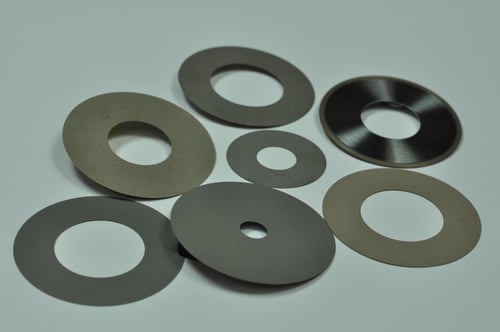
Maintaining a consistent kerf width, smooth surface finish, and strong edge integrity is essential for achieving reliable results. Even small variations in the cutting process can lead to chipping, reduced yield, and compromised part performance. In many cases, these issues are not caused by machine limitations but by improper diamond dicing blade or grinding wheel selection.
By understanding how superabrasive tools influence cutting behavior, manufacturers can significantly improve both precision and process stability.
Why Kerf Quality and Edge Integrity Matter in Precision Dicing
“In semiconductor manufacturing, variations in kerf width and excessive edge chipping during wafer dicing can significantly reduce production yield and compromise component reliability.”
— ScienceDirect Study
The Role of Kerf Width in Precision Cutting
Kerf width refers to the amount of material removed during cutting. In high-precision applications, controlling kerf width is essential for:
- Maintaining tight dimensional tolerances
- Reducing material waste
- Ensuring consistent part geometry
A wider-than-expected kerf can lead to loss of valuable material, while an inconsistent kerf can cause alignment and assembly issues downstream.
Edge Integrity and Its Impact on Part Performance
Edge integrity is especially critical when cutting brittle materials. Poor edge quality can result in:
- Microcracks and chipping
- Reduced mechanical strength
- Increased risk of part failure
In semiconductor and advanced ceramic applications, even minor edge defects can compromise functional reliability.
The Relationship Between Kerf Quality and Cutting Performance
Kerf quality is directly tied to cutting performance. A stable cutting process ensures:
- Uniform material removal
- Reduced vibration and stress
- Improved surface finish
When kerf width and edge quality are controlled, the entire process becomes more predictable and efficient.
The Role of Diamond and CBN in Precision Dicing Applications
Diamond Abrasives for Brittle and Hard Materials
Diamond abrasives are the preferred choice for cutting:
- Silicon wafers
- Ceramics and alumina
- Glass and composite materials
Their extreme hardness allows for clean, precise cuts with minimal chipping, making them ideal for brittle materials.
CBN Abrasives for Applications Requiring High Wear Resistance
While diamond is the primary choice for wafer dicing of brittle materials, CBN is used in supporting applications involving ferrous materials.
CBN (cubic boron nitride) is better suited for:
- Ferrous materials
- High-temperature applications
- Processes requiring extended tool life
CBN grinding wheels offer excellent thermal stability and wear resistance, ensuring consistent performance in demanding environments.
Selecting the Appropriate Superabrasive for the Workpiece
Choosing between diamond and CBN depends on:
- Material type
- Required surface finish
- Cutting conditions
Using the correct superabrasive ensures optimal cutting performance, reduced wear, and improved kerf consistency.
Wheel Design Factors That Influence Kerf Quality
Diamond Particle Size and Abrasive Structure
Abrasive grit size plays a major role in kerf quality:
- Fine grit: Produces smoother surfaces and minimal chipping
- Coarse grit: Increases material removal rate but may reduce edge quality
The abrasive structure must allow for efficient chip removal while maintaining sharp cutting edges.
Bond Systems and Abrasive Retention
Bond type determines how well abrasive particles are held during cutting.
- Strong bonds improve durability but may increase cutting forces
- Softer bonds expose new grains more easily, improving sharpness
Bond type plays an important role in blade performance, especially when choosing the right bond for diamond dicing blades.
Ultra-thin Blade Design for Narrow Kerf Applications
Ultra-thin diamond blades are essential for:
- Minimizing kerf width
- Reducing material loss
- Achieving high-precision cuts
These blades enable tight tolerances and cleaner edges, particularly in semiconductor and micro-component manufacturing.
Maintaining Cutting Performance in Hard and Brittle Materials
Material Properties that Affect Dicing Blade Performance
Different materials respond differently to cutting forces:
- Brittle materials fracture easily under stress
- Hard materials increase abrasive wear
Understanding these properties helps optimize wheel selection and cutting parameters.
Abrasive Wear and Blade Life
Over time, abrasive particles lose their sharpness, leading to:
- Increased friction
- Poor surface finish
- Higher cutting forces
Maintaining proper cutting conditions can also help extend the life of your wafer dicing blade.
The Importance of Stable Cutting Conditions
Stable cutting conditions are critical for maintaining kerf quality:
- Consistent feed rates
- Proper spindle speed
- Effective coolant application
These factors help reduce heat buildup and maintain a stable cutting interface, preventing chipping and uneven kerf formation.
Improving Kerf Quality Through Engineered Superabrasive Solutions
Matching Wheel Design to the Application
No single wheel design works for all applications. Optimal performance requires:
- Correct abrasive type
- Proper grit size
- Suitable bond system
Application-specific design ensures efficient cutting and consistent results.
Benefits of Application-Specific Diamond and CBN Wheels
Engineered wheels provide:
- Improved wear resistance
- Longer tool life
- Better surface finish
- Consistent kerf width
These advantages lead to higher productivity and reduced operational costs.
Supporting Precision Dicing with Engineered Superabrasive Technology
Advanced superabrasive technology allows manufacturers to:
- Achieve tighter tolerances
- Minimize edge defects
- Maintain stable cutting performance
By focusing on the interaction between wheel design and real-world conditions, manufacturers can eliminate variability and improve overall process control.
Improve Kerf Quality with Engineered Diamond and CBN Wheels
Improving kerf quality is not just about machine settings—it requires the right combination of abrasive technology, wheel design, and process control.
By selecting engineered diamond dicing blades and CBN grinding wheels, manufacturers can achieve:
- Consistent kerf width
- Superior edge integrity
- Enhanced cutting performance
- Extended tool life
Eagle Superabrasives provides application-specific solutions designed to meet the demands of precision dicing operations. If you’re looking to improve cutting accuracy and reduce defects, the right superabrasive partner makes all the difference.