

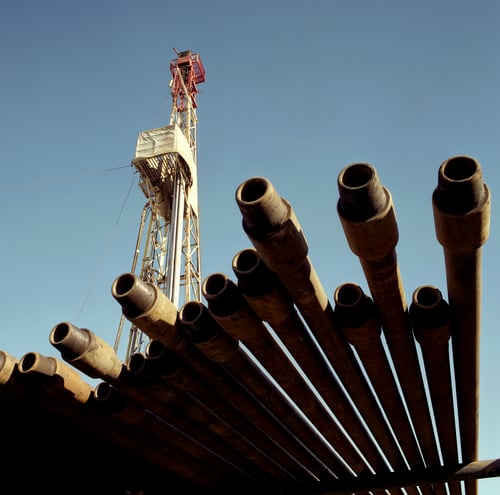
Oil and gas components operate in some of the harshest industrial environments imaginable. Valves, drilling equipment, downhole tools, pumps, and wear sleeves are continually exposed to abrasive particles, corrosive chemicals, high pressures, and extreme temperatures. To extend service life, manufacturers frequently apply advanced surface coatings such as High Velocity Oxygen Fuel (HVOF), thermal spray, and plasma coatings that dramatically improve wear resistance and corrosion protection.
While these coatings significantly increase component durability, they also introduce new machining challenges. After coating, gas components require precision grinding to restore dimensional accuracy and ensure proper sealing. Selecting the wrong grinding wheel can quickly damage an expensive coating, reduce wheel life, increase production costs, or even compromise the performance of the finished component.
When comparing diamond vs. CBN grinding wheels for oil and gas coatings, many manufacturers assume the harder abrasive is always the better choice. In reality, successful grinding depends on much more than hardness alone. Coating chemistry, substrate material, bond type, grit size, coolant strategy, and machine setup all influence wheel performance, surface finish, and overall production efficiency.
One of the most common questions manufacturers ask is whether diamond or CBN (Cubic Boron Nitride) grinding wheels are the better choice. Although both are classified as superabrasives, they are engineered for different applications. Diamond remains the preferred solution for grinding most carbide-based HVOF and thermal spray coatings, while CBN excels when machining hardened steels and other ferrous materials where chemical stability becomes critical.
Understanding the differences between diamond vs. CBN grinding wheels for oil and gas coatings helps manufacturers avoid costly wheel selection mistakes, extend wheel life, preserve coating integrity, and lower the total cost per finished component.
This guide explains how diamond and CBN wheels perform on the coating materials most commonly found throughout the oil and gas industry, helping manufacturers select the right abrasive for maximum wheel life, coating integrity, and overall grinding efficiency.
Why Coating Grinding Is Different From Standard Metal Grinding
Grinding coated components differs significantly from machining conventional metals. Instead of removing material from a uniform steel or alloy surface, the grinding wheel must machine an engineered coating specifically designed to resist wear.
Many coatings used in oil and gas applications contain extremely hard carbide particles embedded within metallic binders. Others are ceramic-based or oxide coatings designed for high-temperature service. These materials intentionally resist abrasion, making them far more difficult to grind than the base metal beneath them.
Unlike conventional machining, coating grinding must remove only a controlled amount of material without introducing excessive heat, cracking, delamination, or altering the coating's engineered properties.
The Role of HVOF, Thermal Spray, and Plasma Coatings in Oil & Gas
HVOF, plasma spray, and other thermal spray processes have become standard manufacturing processes throughout the oil and gas industry because they dramatically improve component durability in highly aggressive environments.
Corrosion alone remains one of the industry's largest operating expenses. According to NACE International, corrosion costs the oil and gas production industry an estimated $1.372 billion annually, including $463 million related to downhole tubing failures. These coatings help protect expensive equipment from corrosion, erosion, and abrasive wear while significantly extending service life.
Typical applications include:
- Gate valves
- Ball valves
- Pump shafts
- Drilling stabilizers
- Downhole tools
- Hydraulic cylinders
- Wear sleeves
- Frac pump components
- Completion equipment
However, applying the coating is only the first step. After spraying, the coating must be precision ground to final dimensions while preserving its wear-resistant properties. Improper grinding can introduce thermal damage, reduce coating adhesion, or leave an inconsistent surface finish that shortens component life.
That is why grinding wheel selection becomes just as important as selecting the coating itself.
Common Coating Materials — Carbides, Nickel, and Cobalt-Based Systems
Oil and gas manufacturers commonly encounter several coating families, each presenting different grinding characteristics.
The most common include:
- Tungsten Carbide-Cobalt (WC-Co)
- Chromium Carbide-Nickel Chrome (Cr₃C₂-NiCr)
- Nickel-based carbide systems
- Cobalt-based carbide systems
- Ceramic thermal spray coatings
- Oxide coatings
- Iron-based hardfacing overlays
While many people focus on the nickel or cobalt binder, the grinding characteristics are usually dominated by the extremely hard carbide particles dispersed throughout the coating. These carbide phases possess hardness levels approaching that of diamond itself, requiring superabrasive grinding wheels for efficient machining.
Iron-based hardfacing materials represent an important exception. Because these coatings contain significant ferrous content, they interact differently with diamond abrasives and often favor CBN wheels instead.
Understanding this distinction is essential when selecting the correct grinding wheel.
Why Tight Tolerances and Precision Grinding Matter More on Coated Parts
Many coated oil and gas components perform sealing functions under extremely high pressures. A valve seat that is only a few microns out of specification may leak under operating conditions, while excessive grinding heat can create microscopic cracks that eventually propagate into coating failure.
Precision grinding influences:
- Surface finish
- Roundness
- Flatness
- Concentricity
- Coating thickness
- Seal integrity
- Fatigue life
- Component reliability
Because many coatings are relatively thin compared to the substrate beneath them, manufacturers often have very little margin for error. Removing too much material can expose the base metal, while insufficient grinding may leave unacceptable dimensional variation.
These demanding tolerances require grinding wheels capable of maintaining consistent cutting action throughout the production cycle.
Diamond and CBN — What Makes Them Superabrasives?
Conventional abrasives such as aluminum oxide and silicon carbide perform well on many general-purpose grinding applications. However, coatings used throughout the oil and gas industry often exceed the practical capabilities of these materials.
That is where superabrasives become essential.
Diamond and Cubic Boron Nitride (CBN) possess exceptional hardness, superior wear resistance, and excellent thermal conductivity, allowing them to machine materials that rapidly wear conventional grinding wheels.
Although both belong to the superabrasive category, their properties make them suitable for very different applications.
How Diamond and CBN Are Synthesized
Industrial diamond is manufactured by recreating the extreme pressure and temperature conditions found deep within the Earth. Carbon atoms are rearranged into the crystalline structure that gives diamond its exceptional hardness.
CBN is synthesized through a similar high-pressure process using boron and nitrogen rather than carbon. The resulting crystal structure produces an abrasive that is slightly less hard than diamond but significantly more chemically stable when grinding ferrous materials.
These manufacturing processes produce uniform synthetic crystals that can be carefully graded for grit size, toughness, and cutting performance before being incorporated into precision grinding wheels.
Hardness Compared — Reading the Knoop Scale
The Knoop hardness scale illustrates why diamond and CBN outperform conventional abrasives.
Approximate hardness values include:
|
Material |
Approximate Knoop Hardness |
|
Aluminum Oxide |
2,100 |
|
Silicon Carbide |
2,500 |
|
Cubic Boron Nitride |
4,500–5,000 |
|
Diamond |
7,000–8,000 |
Diamond remains the hardest known engineering material, making it exceptionally effective for grinding carbide particles, ceramics, glass, and other brittle, non-ferrous materials.
Hardness alone, however, does not determine grinding performance.
Beyond Hardness — Why Chemistry Decides Performance, Not Just Hardness
Many assume the hardest abrasive should always produce the best results. In reality, grinding performance depends on how the abrasive chemically interacts with the material being ground.
Diamond performs exceptionally well on:
- Tungsten carbide
- Chromium carbide coatings
- Ceramics
- Glass
- Silicon carbide
- Composite materials
CBN performs best on:
- Hardened steels
- Tool steels
- High-speed steels
- Iron-based overlays
- Ferrous substrates
The reason lies in chemistry rather than hardness. At elevated grinding temperatures, diamond can react with iron, accelerating wheel wear when grinding ferrous materials. CBN resists this reaction, allowing it to maintain cutting efficiency on steels and iron-group alloys.
Conversely, carbide-based HVOF and thermal spray coatings—the most common wear-resistant coatings used throughout the oil and gas industry—remain ideal applications for diamond grinding wheels because the extremely hard carbide phase dominates the grinding process.
Why Diamond Excels on Carbide Coatings
Once manufacturers understand the composition of oil and gas coatings, the reason for choosing diamond grinding wheels becomes much clearer. Although many HVOF and thermal spray coatings contain nickel or cobalt binders, the grinding process is dominated by the extremely hard carbide particles dispersed throughout the coating.
Those carbide particles are precisely what give these coatings their exceptional wear resistance—and what make them so challenging to machine with conventional abrasives.
Diamond's unmatched hardness allows it to fracture and remove carbide efficiently while maintaining a sharp cutting edge. This produces lower grinding forces, improved dimensional control, and longer wheel life when compared to conventional abrasive wheels.
For this reason, diamond remains the industry standard for grinding many of the most common oil and gas coating systems.
The Chemical Relationship Between Diamond and Carbide
One of the biggest misconceptions surrounding superabrasives is that diamond should never be used around iron-group metals.
The reality is more nuanced.
Diamond does experience chemical wear when grinding materials with significant free iron at elevated temperatures. Carbon atoms can diffuse into iron, causing the abrasive crystal to deteriorate more rapidly.
However, carbide-based HVOF coatings behave very differently.
Materials such as tungsten carbide-cobalt (WC-Co) and chromium carbide-nickel chrome (Cr₃C₂-NiCr) derive their grinding characteristics primarily from the hard carbide phase rather than the metallic binder. Because the grinding wheel is continually engaging these carbide particles, diamond remains the most effective abrasive despite the presence of nickel or cobalt.
In practical production environments, this translates into:
- Faster material removal rates
- Lower grinding forces
- Better surface finishes
- Longer wheel life
- Reduced dressing requirements
- Improved dimensional consistency
Rather than avoiding diamond because a coating contains cobalt or nickel, manufacturers should evaluate the overall coating chemistry and determine which phase dominates the grinding process.
What Happens When Diamond Is Used on Ferrous Materials
Diamond's limitations become apparent when grinding predominantly ferrous materials.
At elevated grinding temperatures, carbon from the diamond crystal begins interacting with iron atoms. This microscopic reaction gradually weakens the abrasive particles, causing the wheel to lose cutting ability faster than expected.
As cutting efficiency declines, operators often compensate by increasing grinding pressure.
Unfortunately, this creates a cycle of:
- Higher temperatures
- Faster wheel wear
- Increased power consumption
- Reduced surface finish quality
- Shorter wheel life
For hardened steels, iron-based overlays, and other ferrous applications, CBN avoids this chemical reaction entirely and maintains cutting performance far longer.
Understanding where this transition occurs is one of the most important factors in successful wheel selection.
Where Diamond Continues to Dominate
Despite the popularity of CBN for ferrous materials, diamond remains the preferred abrasive across numerous oil and gas applications.
Diamond wheels are commonly selected for grinding:
- Tungsten carbide HVOF coatings
- Chromium carbide thermal spray coatings
- Ceramic coatings
- Oxide coatings
- Silicon carbide components
- Technical ceramics
- Carbide seal faces
- Carbide valve components
- Hard, brittle non-ferrous materials
These materials benefit from diamond's exceptional hardness, high thermal conductivity, and ability to maintain aggressive cutting action throughout long production runs.
When properly matched with the correct bond system and operating parameters, diamond wheels consistently deliver the lowest cost per part for carbide-based coating applications.
Why CBN Performs Better on Ferrous Materials and Steel Components
Although diamond dominates carbide coating applications, CBN becomes the superior choice whenever grinding primarily ferrous materials.
This distinction is particularly important in oil and gas manufacturing because many components combine coated surfaces with hardened steel substrates or iron-based wear overlays. Selecting the correct abrasive for each operation helps maximize both wheel life and finished part quality.
Thermal Stability at Elevated Grinding Temperatures
Grinding generates substantial heat, especially when machining hardened steels or high-alloy components.
CBN offers outstanding thermal stability under these conditions. Unlike diamond, it retains its cutting characteristics without experiencing the same chemical interaction with iron-based materials.
This allows CBN wheels to:
- Maintain consistent cutting action
- Generate lower grinding forces
- Reduce burning and thermal damage
- Improve dimensional stability
- Extend wheel service life
These advantages become increasingly important in high-production environments where process consistency directly affects productivity and operating costs.
Eliminating Chemical Wear on Ferrous Materials
One of CBN's greatest strengths is its chemical stability.
Because Cubic Boron Nitride does not react with iron-group metals the way diamond does, it continues cutting efficiently throughout extended production cycles.
Typical applications include:
- Hardened alloy steels
- Tool steels
- High-speed steels
- Iron-based hardfacing overlays
- Heat-treated valve components
- Bearing surfaces
- Hardened pump shafts
When the workpiece consists primarily of ferrous material, CBN almost always delivers longer wheel life than diamond.
Improving Wheel Life in Demanding Production Environments
Oil and gas manufacturers often prioritize process reliability over maximum removal rates alone.
Unexpected wheel changes increase downtime, interrupt production schedules, and introduce variability into precision grinding operations.
Because CBN resists chemical degradation on ferrous materials, manufacturers frequently experience:
- Longer intervals between wheel changes
- More predictable grinding performance
- Lower tooling costs
- Improved process repeatability
- Reduced scrap rates
The result is a more stable grinding process that supports consistent quality while lowering overall manufacturing costs.
Choosing the Right Bond for Coating Applications
Selecting the proper abrasive is only part of the equation.
The grinding wheel's bond system determines how the abrasive grains are supported, exposed, and released throughout the grinding cycle. Even the correct abrasive can perform poorly if paired with the wrong bond.
At Eagle Superabrasives, bond selection is matched to the coating material, removal rate, machine rigidity, coolant strategy, and desired surface finish.
Resin Bond — Best for Controlled Grinding and Shock Absorption
Resin bond wheels remain one of the most versatile choices for coating applications.
Their slightly resilient structure helps absorb vibration while exposing fresh abrasive as the bond gradually wears.
Advantages include:
- Excellent surface finishes
- Lower grinding forces
- Reduced risk of thermal damage
- Smooth cutting action
- Good adaptability across varying geometries
Resin bond wheels are widely used for finish grinding carbide coatings where maintaining coating integrity is just as important as achieving dimensional accuracy.
Vitrified Bond — Precision, Form Holding, and Process Stability
Vitrified bond wheels offer a rigid, porous structure that excels in high-precision grinding operations.
Compared with resin bonds, vitrified wheels provide:
- Superior profile retention
- Excellent dimensional consistency
- Better coolant penetration
- Lower grinding temperatures
- Longer intervals between dressing
These characteristics make vitrified wheels ideal for CNC grinding operations that require exceptional repeatability and tight tolerances.
Metal Bond — Maximum Wheel Life for Demanding Applications
Metal bond wheels provide exceptional abrasive retention and durability.
Because the bond wears very slowly, these wheels maintain profile accuracy over long production runs and perform well in applications where wheel wear must be minimized.
Metal bond wheels are often selected for:
- High-volume production
- Precision profile grinding
- Applications requiring exceptional wheel life
- Difficult carbide coatings
Although they generally remove material more slowly than resin bonds, their durability often reduces overall tooling costs in demanding production environments.
Electroplated Bond — Single-Layer Precision
Electroplated wheels feature a single layer of superabrasive permanently bonded to the wheel surface through a nickel matrix.
Their primary advantages include:
- Exceptional form accuracy
- Aggressive initial cutting action
- Ability to produce complex profiles
- No dressing required
Electroplated wheels are particularly effective for specialized applications where maintaining an exact wheel profile is more important than maximizing wheel life.
Matching Bond Strength to Coating Characteristics
The strongest bond is not always the best choice.
An ideal grinding wheel balances abrasive retention with controlled grain release. If the bond is too strong, dull abrasive particles remain trapped in the wheel, increasing heat generation and grinding forces. If the bond is too weak, abrasive grains are released prematurely, shortening wheel life.
Selecting the appropriate bond depends on several factors, including:
- Coating composition
- Coating thickness
- Material removal rate
- Machine rigidity
- Coolant delivery
- Surface finish requirements
- Production volume
Rather than relying on a one-size-fits-all solution, experienced application engineers evaluate the entire grinding process to recommend the combination of abrasive, bond, grit size, and wheel specification that delivers the best overall performance.
Grit, Coolant, and Machine Setup for Coated Workpieces
Even the correct abrasive and bond system can underperform if the grinding process itself is not properly optimized. Grit size, coolant selection, and machine setup all have a direct impact on wheel life, surface finish, coating integrity, and overall production efficiency.
By fine-tuning these variables alongside the wheel specification, manufacturers can maximize both grinding performance and component quality.
Grit Size — Balancing Surface Finish and Material Removal
Selecting the appropriate grit size is always a compromise between productivity and finish quality.
Coarser grits expose larger abrasive particles that remove material aggressively, making them ideal for stock removal and rough grinding. However, they leave a rougher surface finish and may require additional finishing operations.
Finer grits produce a smoother surface finish with tighter dimensional control but remove material more slowly.
As a general guideline:
|
Grit Size |
Typical Application |
|
Coarse (80–120) |
Heavy stock removal and rough grinding |
|
Medium (120–180) |
General-purpose grinding |
|
Fine (220–320+) |
Finish grinding and precision tolerances |
The optimal grit size depends on factors such as:
- Coating thickness
- Surface finish requirements
- Stock removal allowance
- Machine horsepower
- Production volume
- Wheel bond type
Many manufacturers use multiple wheel specifications throughout the grinding process—starting with a coarser wheel for stock removal before switching to a finer grit for finishing.
Coolant Considerations for Diamond and CBN Wheels
Coolant serves several important functions beyond simply keeping the workpiece cool.
A properly formulated grinding fluid helps:
- Remove grinding swarf
- Reduce grinding temperatures
- Minimize wheel loading
- Improve surface finish
- Extend wheel life
- Protect coated surfaces
Proper coolant delivery is especially important when grinding thermal spray and HVOF coatings because localized heat buildup can introduce residual stresses or affect coating integrity.
The coolant should be directed precisely into the grinding zone where the abrasive contacts the workpiece. Poor nozzle positioning often reduces coolant effectiveness regardless of flow rate.
Water-soluble synthetic coolants are commonly used in precision grinding applications because they provide excellent cooling while maintaining a clean grinding environment. Oil-based coolants may be preferred for certain applications requiring maximum lubrication and superior surface finishes.
Coolant concentration should also be monitored regularly. Fluid that is too dilute may reduce corrosion protection and lubricity, while excessive concentration can reduce cooling efficiency and increase operating costs.
Machine Setup for High-Performance Coating Grinding
Even premium grinding wheels cannot compensate for poor machine conditions.
Machine rigidity plays a critical role in maintaining consistent wheel performance. Excessive vibration or spindle runout can reduce surface quality, accelerate wheel wear, and increase the risk of damaging expensive coatings.
Manufacturers should routinely verify:
- Spindle accuracy
- Wheel balance
- Machine rigidity
- Proper wheel mounting
- Coolant nozzle alignment
- Feed rates
- Wheel speed
- Depth of cut
Small adjustments in these parameters often have a greater effect on wheel life than changing wheel specifications alone.
Optimizing the complete grinding system—not just the wheel—produces more consistent results, improves repeatability, and lowers the overall cost per finished part.
Diamond or CBN? A Quick-Reference Decision Guide
Selecting between diamond and CBN becomes much easier once the coating chemistry and substrate material are clearly identified.
Although both are superabrasives, they are designed to solve different grinding challenges.
Use Diamond When Grinding These Materials
Diamond remains the preferred abrasive for hard, brittle, non-ferrous materials commonly found in wear-resistant coating systems.
Choose diamond wheels when grinding:
- Tungsten carbide HVOF coatings
- Chromium carbide thermal spray coatings
- Ceramic coatings
- Oxide coatings
- Silicon carbide components
- Technical ceramics
- Glass
- Carbide seal faces
- Carbide valve components
These applications take full advantage of diamond's exceptional hardness and wear resistance, delivering excellent material removal rates, long wheel life, and superior surface finishes.
Use CBN When Grinding These Materials
CBN becomes the preferred choice whenever the grinding operation is dominated by ferrous materials.
Typical CBN applications include:
- Hardened steels
- Tool steels
- High-speed steels
- Iron-based hardfacing overlays
- Heat-treated alloy steels
- Bearing components
- Ferrous pump shafts
- Steel valve bodies after heat treatment
Because CBN resists the chemical wear that affects diamond when grinding iron-group metals, it provides more consistent performance and longer wheel life in these applications.
When Conventional Abrasives Still Make Sense
Although superabrasives dominate precision grinding applications, conventional abrasives continue to play an important role in manufacturing.
Aluminum oxide and silicon carbide wheels may still be appropriate for:
- Light deburring
- General-purpose grinding
- Low-cost maintenance operations
- Non-critical stock removal
- Applications where wheel cost outweighs productivity
However, when grinding advanced carbide coatings or hardened production components, conventional wheels typically wear much faster and require more frequent dressing. For high-value oil and gas parts, the higher initial investment in a superabrasive wheel is often offset by improved productivity, longer wheel life, reduced downtime, and lower cost per part.
While this guide focuses on the coating materials most commonly found throughout the oil and gas industry, the same selection principles apply across many other HVOF applications. If you're working with a broader range of HVOF-coated components—including ceramic coatings, chromium-based systems, and specialized aerospace coatings—be sure to read our full guide to choosing between diamond and CBN wheels for HVOF grinding, which explores wheel selection across a wider range of coating chemistries.
Ready to Get the Right Wheel for Your Coating? Partner with Eagle Superabrasives
The most productive grinding operations take a systems approach—matching the abrasive, bond, grit, and operating parameters to the specific application rather than relying on a generic wheel specification. That approach reduces scrap, improves repeatability, extends wheel life, and lowers the total cost per finished component.
At Eagle Superabrasives, we believe the right grinding wheel comes from understanding your coating chemistry, substrate, and production goals, not from defaulting to the hardest abrasive available. Our application engineers evaluate each job individually to recommend the specification that delivers the best performance and lowest cost per part.
Whether you're grinding carbide HVOF coatings, hardened steel components, or precision downhole tooling, we can help you find the right wheel for the job. Contact Eagle Superabrasives to talk through your application.