

.png?width=5&height=3&name=Untitled%20design%20(5).png) Wafer dicing is one of the most critical stages in semiconductor manufacturing. It’s where precision meets performance—and where even the smallest misstep can lead to costly yield losses or premature blade wear. Choosing the correct diamond dicing blade isn’t just a technical decision; it’s the single most influential factor that directly determines the efficiency, accuracy, and cost-effectiveness of your wafer dicing process.
Wafer dicing is one of the most critical stages in semiconductor manufacturing. It’s where precision meets performance—and where even the smallest misstep can lead to costly yield losses or premature blade wear. Choosing the correct diamond dicing blade isn’t just a technical decision; it’s the single most influential factor that directly determines the efficiency, accuracy, and cost-effectiveness of your wafer dicing process.
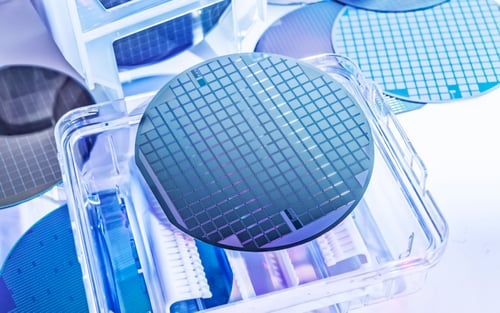
Modern materials like ceramics, sapphire, compound semiconductors, and ultra-thin silicon wafers present unique challenges that demand far more than a one-size-fits-all approach. This guide from Eagle Superabrasives will walk you through how to match the right precision cutting tools—specifically diamond wheels and blades—to your specific application needs, ensuring top-tier performance, longer blade life, and dramatically reduced chipping.
Why Precision is Non-Negotiable in Wafer Dicing
In the age of advanced microelectronics, tolerances are tighter than ever. Whether you’re working with brittle sapphire substrates or delicate silicon wafers, the precision of the dicing process is paramount. Submicron defects or excessive edge chipping can cascade into massive downstream failures.
At the heart of this precision lies the diamond dicing blade. Its specifications—diamond grit size, bond type, concentration, diamond exposure, and profile—must align perfectly with the wafer material being diced. Even small mismatches can result in blade breakage and oversized cuts, excessive heat generation, and unacceptable die quality. This makes dicing blade selection for your specific application a critical step.
The Critical Role of the Diamond Dicing Blade in Yield and Blade Life
Your dicing blade affects not just the immediate cut but the overall wafer dicing process, from edge quality to throughput. A dicing blade that is too soft for the application will wear quickly, leading to an increased frequency of blade changes, while one with a bond that is too hard may increase chipping. By fine-tuning diamond blade parameters, you can maximize both yield and blade life, resulting in fewer interruptions, reduced rework, and lower costs per wafer.
Material Science: Matching the Dicing Blade to the Wafer Material
Every material demands a different blade strategy. Understanding substrate hardness, brittleness, and thermal conductivity helps you make the optimal dicing blade selection.
- Silicon: The most common material, requiring a balanced approach between cut speed and surface integrity.
- Sapphire and Ceramics: Extremely hard and brittle, needing high-rigidity blades and often fine grit sizes to minimize edge defects.
- Compound Semiconductors (e.g., GaAs, GaN, SiC): These materials pose thermal and mechanical challenges, requiring optimized diamond concentration and bond hardness for best results.
By carefully considering the wafer material and specific application, you can match the dicing blade specifications—like bond type and grit size—to the task, ensuring your dicing saw delivers peak performance.
Key Considerations for Silicon Wafer and Substrate Dicing
Selecting the right diamond dicing blade involves a complex trade-off between speed, finish, and blade life. The ideal blade is dictated by the wafer material and specific application requirements.
Dicing Silicon and Compound Semiconductors
When dicing silicon, blade selection depends on wafer thickness and doping. Thinner wafers or high-speed operations may require fine grit resin bond diamond blades to prevent cracking or blade breakage and oversize cut. For GaN or SiC, a tougher metal bond with a coarse diamond grit size may improve material removal rates while maintaining a low risk of chipping.
Grinding Ceramics, Sapphire, and Other Hard Material Substrates
Ceramics and sapphire require exceptional cut edge precision and minimal subsurface damage. Metal bond blades with high diamond concentration and finer diamond grit (often between #3000–#6000) are suitable for applications requiring a superior surface finish. These blades provide higher rigidity, making them ideal for hard materials.
Factors for Specific Application Requirements
Application-specific factors like die size, kerf width, and thermal sensitivity must also be considered. Smaller die sizes demand thinner blade thickness with tighter tolerances, while heat-sensitive materials may require coolant-optimized processes and dicing blades designed for low heat generation.
Diamond Characteristics and Blade Selection
The properties of the diamond particles significantly influence performance and blade life.
The Influence of Diamond Particle Size and Concentration
- Grit Size: Finer diamond grit (3000 - 6000 grit) offers smoother finishes and is preferred for brittle materials; coarse grit (200 - 600 grit) delivers faster material removal.
- Concentration: Higher diamond concentration improves durability and cut consistency but may reduce cutting speed and blade performance. Lower concentrations enable faster cutting but can increase wear.
Material Removal Rate and Surface Finish Expectations
Finding the right balance between material removal rate and surface integrity is crucial. Aggressive cutting can save time but may result in microcracks. Conversely, overly gentle cuts can slow throughput without a meaningful gain in quality. This is where proper blade diamond grit and bond type play a central role.
The Foundation: Choosing the Right Bond for the Diamond Dicing Wheel
Understanding Bond Type and Hardness
The bond matrix holds the diamonds in place and affects wear rate, rigidity, and thermal stability. The two most common bond types for wafer dicing are resin bond and metal bond.
Resin Bond Blades: Achieving a Fine Finish and Reducing Chipping
Resin bond diamond blades offer flexibility and are ideal for achieving clean, low-stress cuts. They reduce chipping in thin silicon wafers or delicate substrates, making them ideal for applications involving microelectronics and photonics.
Metal Bond Blades: When Durability and Blade Rigidity Are Required
Metal bonds offer higher rigidity and are well-suited for hard materials like sapphire and alumina. Sintered metal bond blades provide better wear resistance and are essential when high cut consistency over long runs is a critical application.
The Function of the Substrate and Matrix
The blade's core substrate (steel, alloy, or composite) also influences vibration damping and rigidity. A well-matched core reduces deflection and improves straightness and kerf accuracy during high-speed dicing.
Essential Dicing Blade Selection Factors
Correct Dicing Blade Exposure and Blade Edge Profile
Excessive exposure can cause deflection and premature wear, while insufficient exposure may reduce cutting efficiency. Likewise, edge profile must match the kerf requirement to avoid overcutting or material stress.
Minimizing Blade Wear and Addressing Premature Blade Failure
Wear patterns like glazing, loading, or chipping indicate mismatches in blade design or dicing parameters. Addressing these through correct bond choice, coolant application, and spindle speed adjustment can extend blade life dramatically.
Process Optimization: Maximizing Grinding Performance
Beyond blade selection, dialing in your wafer dicing process parameters is key to unlocking performance.
One study on optimizing dicing parameters achieved a maximum edge chipping width of 38.54 μm, which was an 8.23% reduction compared to conventional methods.
Source: PMC12565965 – Process Parameter Influence and Optimization, Section 6.2
This kind of result demonstrates how precision engineering of feed rate, spindle speed, and coolant delivery can result in measurable quality gains.
Setting Parameters for the Dicing Process
The Relationship Between Feed Rate, Spindle Speed, and Blade Breakage
High feed rates can increase throughput but may cause blade deflection or breakage. Spindle speed must be matched to the blade diameter and material to avoid overheating or edge cracking.
Operational Factors That Extend Blade Life
- Stable mounting and minimal runout
- Controlled cutting depths
- Incremental cutting on hard substrates
All of these contribute to improved blade longevity and wafer yield.
The Importance of Proper Coolant in Material Removal
Coolant selection and delivery are vital. They reduce heat, flush debris, and minimize friction. A poor coolant setup can lead to localized heating, warping, or microfractures.
Truing and Dressing the Grinding Wheel
Just like in traditional grinding applications, dicing blades must be trued and dressed to maintain their geometry and performance. Truing corrects runout and warping, while dressing exposes fresh diamond particles for consistent cutting. Regular maintenance ensures reliable dicing quality and avoids the cost of premature blade replacement.
Custom Diamond Tools for Critical Dicing Applications
A Checklist for Finalizing Your Blade Selection
- Match blade type to wafer material (silicon, sapphire, ceramics, etc.)
- Choose optimal grit size and concentration
- Select the proper bond (resin vs. metal)
- Evaluate process parameters (speed, feed, coolant)
- Ensure blade profile and exposure match your application
Partner with Eagle Superabrasives for Custom Diamond Dicing Blade Solutions
At Eagle Superabrasives, we specialize in high-performance diamond wheels and dicing blades tailored to your exact wafer dicing needs. Whether you're working with advanced semiconductors or hard ceramics, our custom-formulated diamond dicing wheels are engineered to deliver cleaner cuts, longer life, and higher yield. Contact us today to discuss your application and experience the advantage of expert-engineered solutions.